HAUSE / NewSewerLine.ca / Calgary + Alberta
A new sewer line.
Every step,
considered.
From the first camera inspection to a restored front yard. Understand the route, compare repair with replacement, and plan the whole job.
An independent guide to the work beneath your home. Read, explore, then ask a better question.
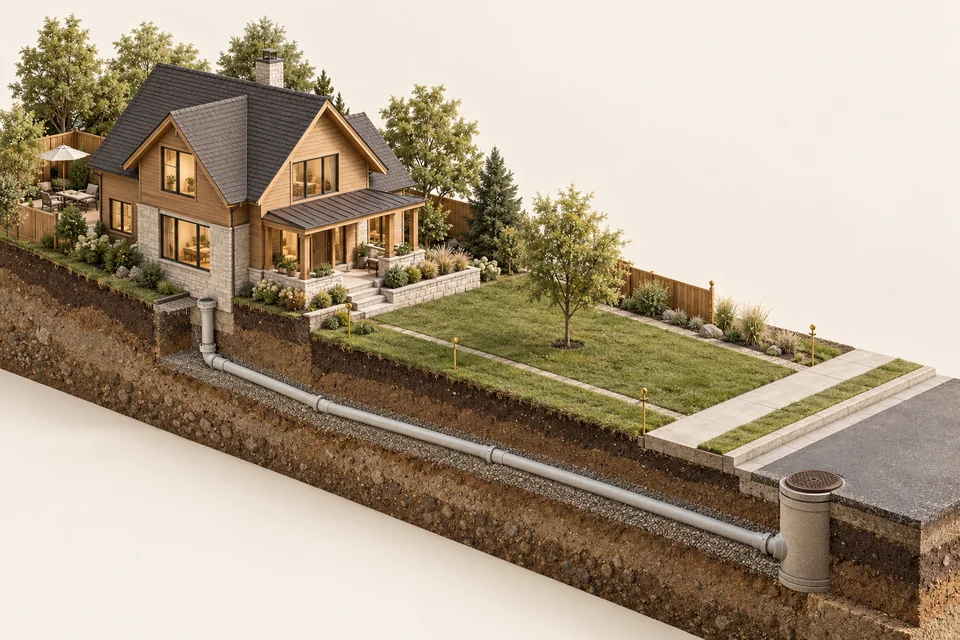
Know the route before the shovel.
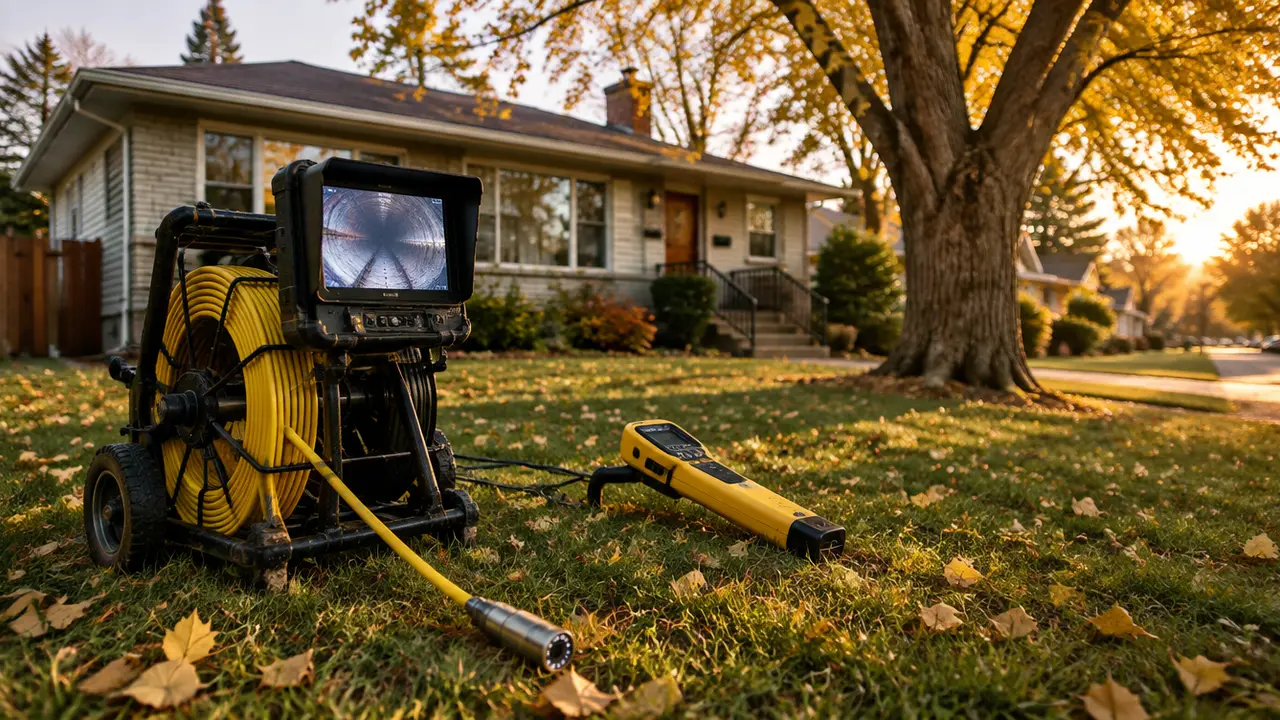
Start with the camera evidence and utility locates. A private sewer replacement and a first-time service are different scopes; the connection, approvals and work limits need to be settled before digging.
Map the projectA sound pipe needs a sound route.
A new line must hold its designed grade from the house to the connection. A liner follows an existing belly; correcting lost grade means exposing and regrading the affected run. Camera findings decide which work is justified.
Compare new line and repairKeep the work visible for inspection.
The open pipe and trench are checked before backfill. Preserve the camera record, permit sign-off and agreed warranty at handover so the finished surface does not hide missing evidence.
Read the handover guideThe project ends at the surface.
The quote should explain what comes back: compacted fill, lawn, paths, concrete and any settlement allowance. Restoration belongs in the scope from the first conversation, not as a surprise at the end.
Plan excavation and restorationFor Calgary and Alberta homeowners weighing a new sewer line: when it beats a repair, what the project involves from locate to sign-off, and what it costs in 2026.
A new sewer line is a full replacement of the private pipe that carries wastewater from your house to the municipal connection, or a first-time service for a new or infill build. In Calgary the homeowner owns the pipe from the house to the property line. A new line is usually right when a camera shows failures at several points, the pipe material has aged out, or the property is being rebuilt.
Run a new sewer line across a Calgary lot, from locate marks to restored lawn
Pick the project, the method, what the route crosses, the length, the depth and the season, then play the job and watch the yard open, the old clay come out, the new pipe go in and the surface go back, with the planning range and the rules updating as you go.
What the model shows, in words
The yard is the expensive part
Choose a driveway or landscaping instead of lawn and watch the planning range climb even though the pipe has not changed. The model adds the same restoration amounts as the project planner: nothing extra for seeded lawn, $500 to $2,000 for landscaping and $1,500 to $5,000 for concrete. Switch to trenchless and those amounts drop out, because only the pits are dug and restored.
Depth decides how the trench is built
Set the depth past 1.5 metres and the trench section in the corner changes: shoring goes in along both walls, and the panel cites section 450 of Alberta's OHS Code. The spoil pile moves at least a metre from the edge, as section 453 requires. A shallow line keeps straight walls, with a reminder that the real depth comes from the camera locate, not a guess.
Most of the calendar is waiting
Press play and the clock spends its first stretch on paperwork: the scope, a locate request with at least three full working days of notice, the quote and the permits. The dig, the pipe and the inspection come quickly after that. The days-on-site counter uses the planner's spans, one to three working days for open cut and one to two for trenchless, with more in winter.
Nothing is covered before it is seen
Partway through the job an inspection tag appears on the open trench. The model will not backfill until it has, which is the order the ten-step process insists on. Backfill then goes back in visible lifts, the part of the job that decides whether a driveway settles over the trench a few years later.
An infill line is sized, not copied
Switch the project to an infill new service and the old house outline fades, the old service is capped at the property line and a new, larger line runs to a deeper basement with a backwater valve. The panel adds the municipal fees the range cannot include. The picture is illustrative: widths, depths and timings are drawn to explain the sequence, not measured from a real lot.
Where is your sewer line project right now?
Pick the closest match. Each path goes to the guide that answers it in full.
New Line or Repair? Check
The check counts the signals in your camera findings, pipe material, age, backup history and plans that point toward a new sewer line, and lists the signals that point toward a repair. Three or more new-line signals means a new line makes sense. Below that, a line with findings reads as price both (one or two signals) or repair the defect (none), and a line with no findings reads as keep and maintain.
How the New Line or Repair? Check works →
New Sewer Line Project Planner
Plan a new sewer line in Calgary or Alberta: the ten steps, locate and permit lead times, trench-protection rules, days on site and a 2026 CAD planning range.
New Line or Repair? Check
Read these first
Sewer lateral replacement
What a full replacement includes, from the camera scope to the as-built, and what to refuse.
CornerstoneThe ten-step process
Scope, locates, route, quote, permits, dig, install, inspect, backfill and records, in order.
CornerstoneInfill and renovation lines
Sewer work timed around demolition, foundations, suites and occupancy.
CornerstoneCalgary service area
Older communities, City records, the ownership split and who to call.
What it looks like down there
Illustrations of what this work involves and what a camera or a trained eye picks up. Every guide on NewSewerLine.ca carries more like these.
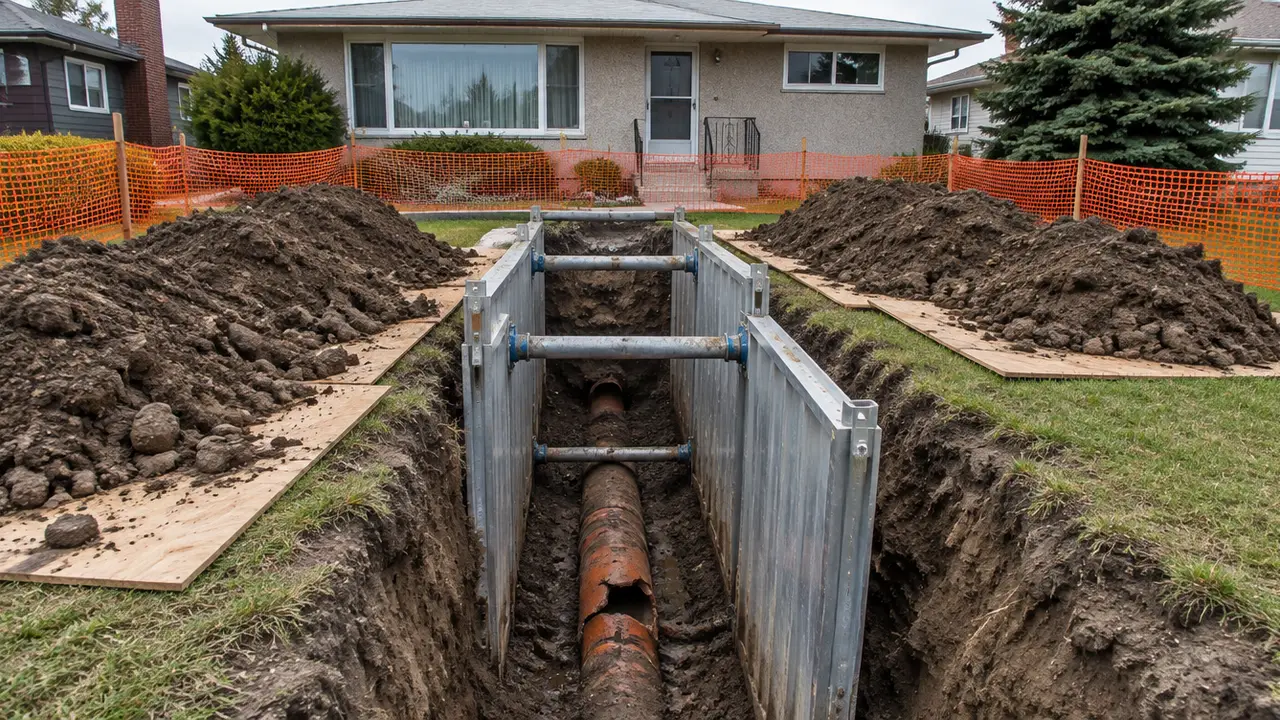
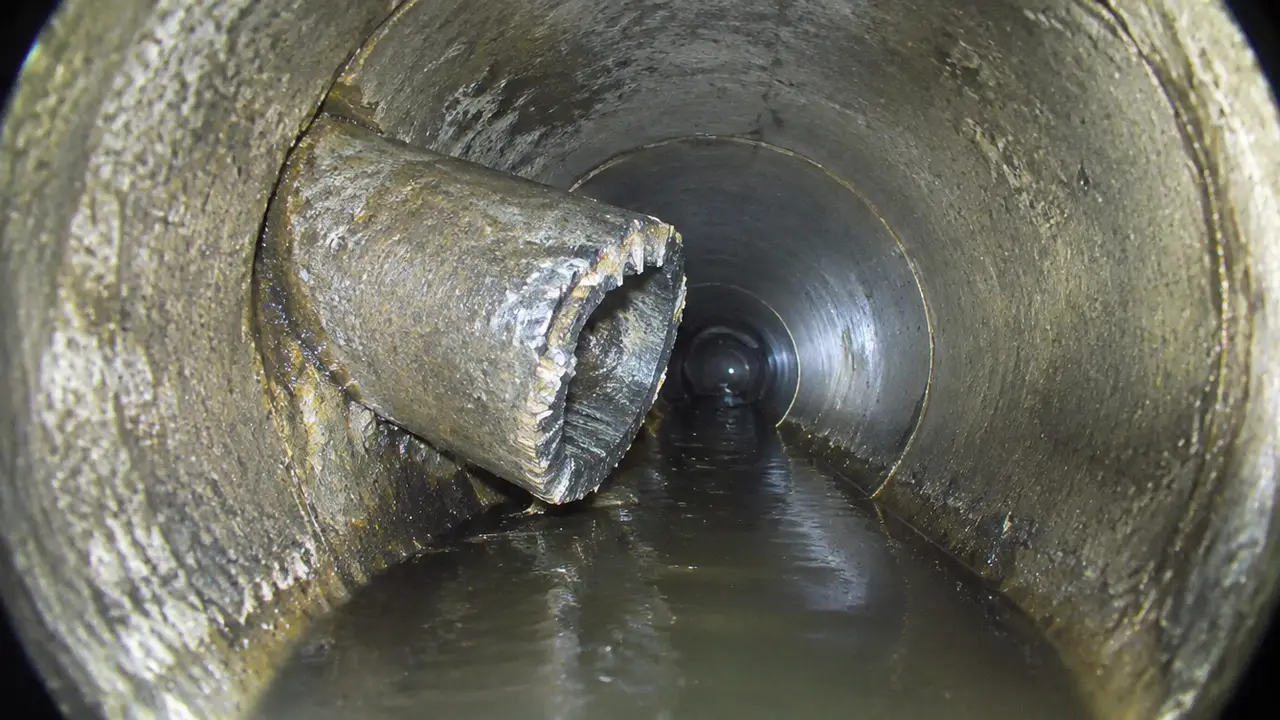
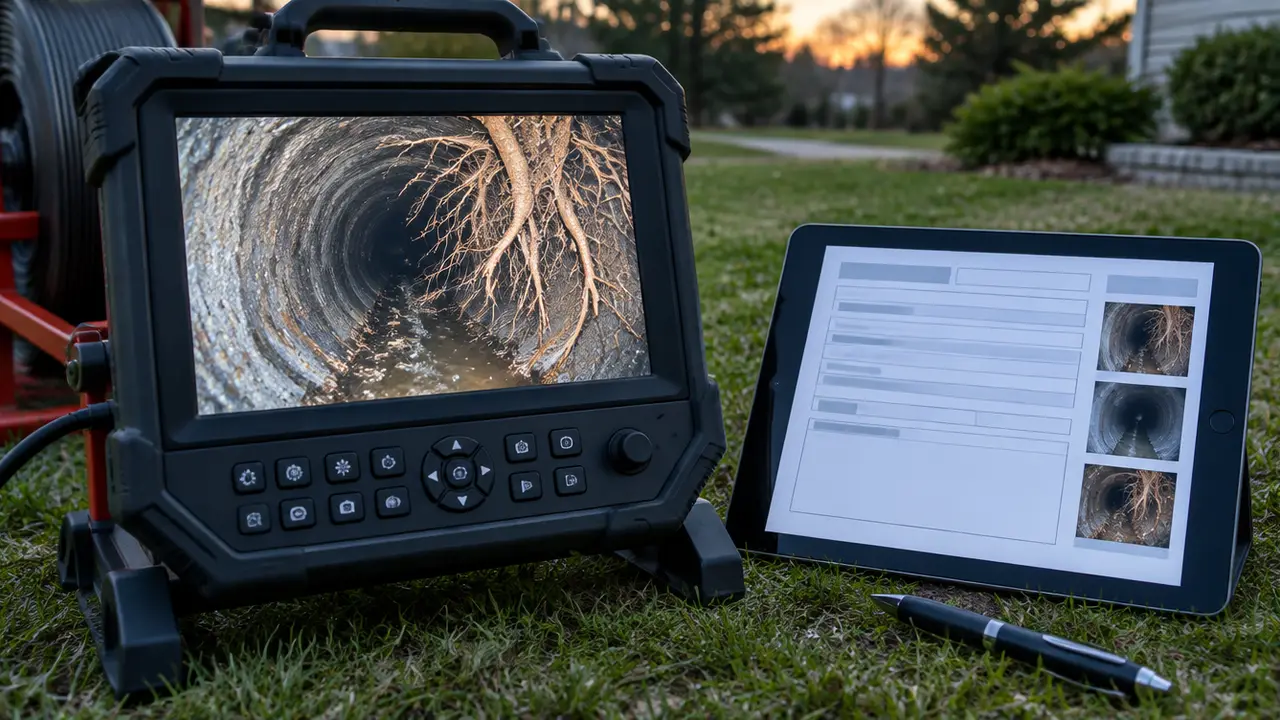
01 /When is a new sewer line the right call?
A new line is the right call when the pipe itself has reached the end of its life, not just when it has a problem. The honest test is a recorded camera inspection: if it shows failures at several points along the run, a belly holding water, collapsed or deformed sections, or a material that has aged out, patching one spot usually leaves the next one waiting. If it shows one defect in otherwise sound pipe, a repair is usually the better value, and a good contractor will say so.
- Failed camera inspection: breaks, offset joints or a belly identified on the scope.
- Recurring backups despite cable cleaning or jetting.
- Roots or collapse beyond what a spot repair can reach.
- Clay, cast iron or Orangeburg laterals near the end of their service life.
- Infill, garage suite or a service upgrade that needs a new or larger connection.
- A real estate condition, an insurance claim or a municipal notice that forces a decision on a deadline.
Count your own signals with the New Line or Repair? Check, and read the full reasoning in new line vs repair. Replacement is not always the answer; the footage decides.
02 /What does a new sewer line project actually involve?
A new sewer line is a small construction project with a municipal permit, a utility locate, a trench or pits, an inspection and a restoration plan. The pipe goes in quickly; most of the calendar is preparation. The same ten steps apply whether the job is a front-yard lateral in Killarney or an acreage run in Rocky View County.
The four jobs that make up this site are the lateral replacement for an existing house, the new service connection for an infill or new build, infill and renovation lines timed around other trades, and the excavation and restoration that sits under all of them. The step-by-step version is the process page, and the project planner turns your length, depth and surfaces into a planning range and a checklist.
03 /Who owns which part of the line in Calgary?
The City of Calgary describes each sanitary service line as two sections: from the sanitary main to the property line, owned and maintained by the City, and from the property line to the house, owned and maintained by the homeowner. That is the text the City publishes with its open data on public sanitary service lines, and it is why a Calgary quote for a new line normally stops at the property line.
The same data only covers the City's section; the pipe on your side can be a different material and a different age. For a specific problem at the boundary, call 311 before booking work. Surrounding towns and counties set their own rules, which is why the Alberta service area page tells you what to ask rather than guessing.
04 /What does a new sewer line cost?
As a 2026 planning estimate, a new lateral for an existing house typically quotes about $12,000 to $35,000 CAD by open cut for a 15 to 25 m run, and about $9,000 to $30,000 by trenchless methods. Depth, a driveway or mature trees on the route, a new cleanout, permits and any City-side work decide where a quote lands.
The cost page breaks a quote into its lines, and paying for a new sewer line covers insurance, financing and tax questions. If the line runs under the house, start with replacing a sewer line under the basement floor.
05 /What should I have ready before asking for quotes?
Quotes for a new sewer line are only comparable when every contractor prices the same job. Five things make that possible, and most of them come from one visit with a camera.
- The footage: a recorded camera run from a cleanout to the connection, with the distance counter visible and each defect noted.
- The route and depth: marked on the surface with a sonde during the same visit, and written on a sketch.
- What sits on top: lawn, driveway, trees, deck, garden beds, irrigation or a finished basement floor, with photos.
- Your plans: staying, selling, adding a suite or rebuilding, because they change the size and the rules.
- Any deadline: a condition date, a municipal notice or an insurance claim number.
With those in hand, the project planner gives you a planning range to hold quotes against, and every contractor can price from the same scope instead of guessing.
06 /Who is behind NewSewerLine.ca?
NewSewerLine.ca is part of the HAUSE Sewer network, an independent information and quote-request service. HAUSE is not a contractor: it does not dig, lay pipe or pull permits. The pages explain the decision and the project in plain terms, cite the City of Calgary, the Government of Alberta and Utility Safety Partners where rules are stated, and label every estimate. Installation technique is covered on sister site SewerInstall.com, and new services for builders across Canadian cities on NewSewerLines.com.
When you are ready, send your details and footage and the desk will reply with next steps. Terms are defined in the glossary, and short answers are in the FAQ.
Every guide on NewSewerLine.ca
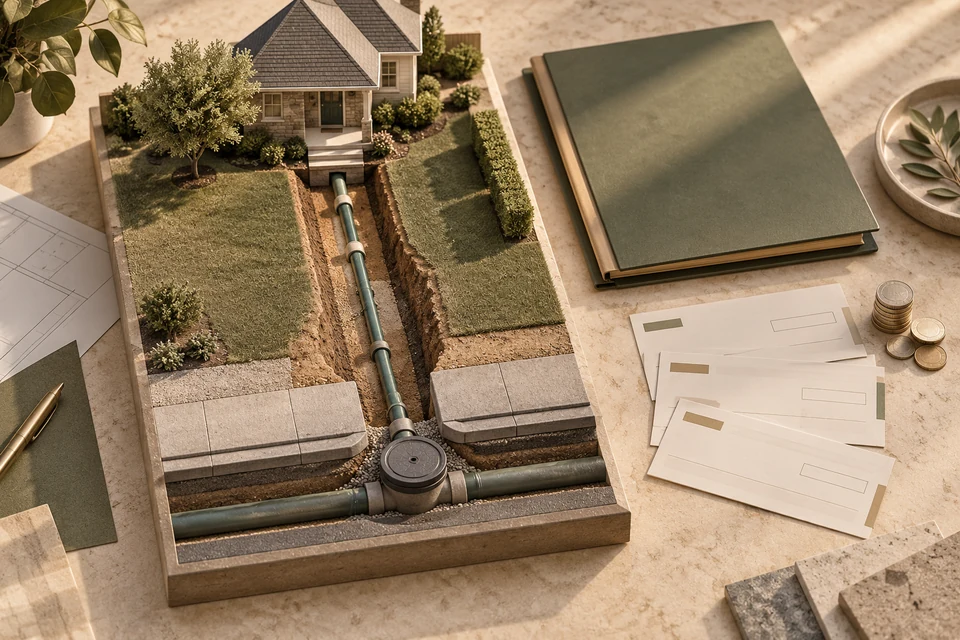
Paying for a new sewer line: insurance, financing, tax and value
How Calgary and Alberta homeowners pay for a new sewer line: what insurance does and does not cover, deposits and payment schedules, tax treatment and home value.
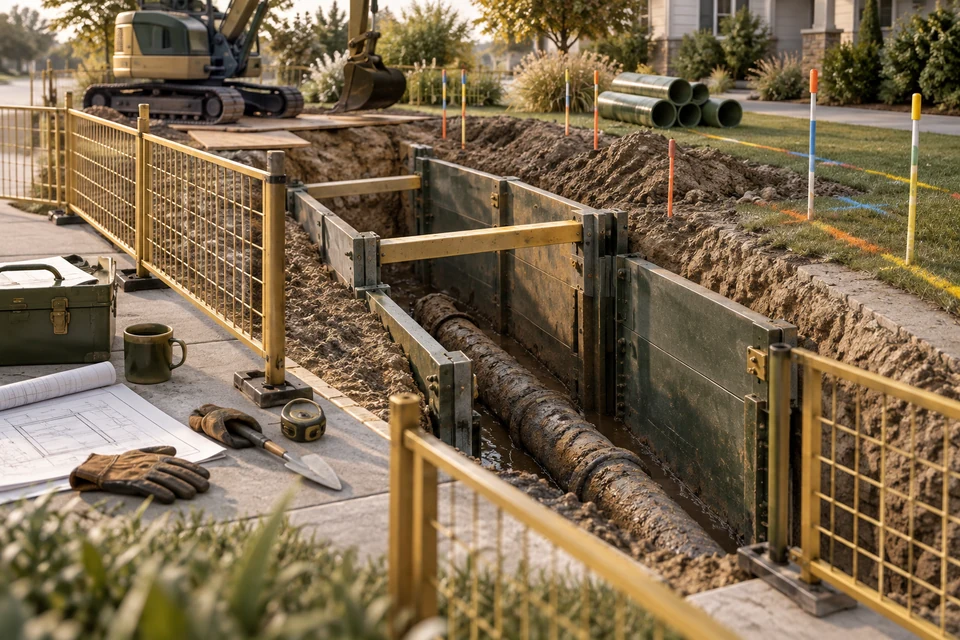
Can I replace my own sewer line?
Can a homeowner replace their own sewer line in Calgary or Alberta? Homeowner permits, locates, trench dangers and the parts you can safely do yourself.
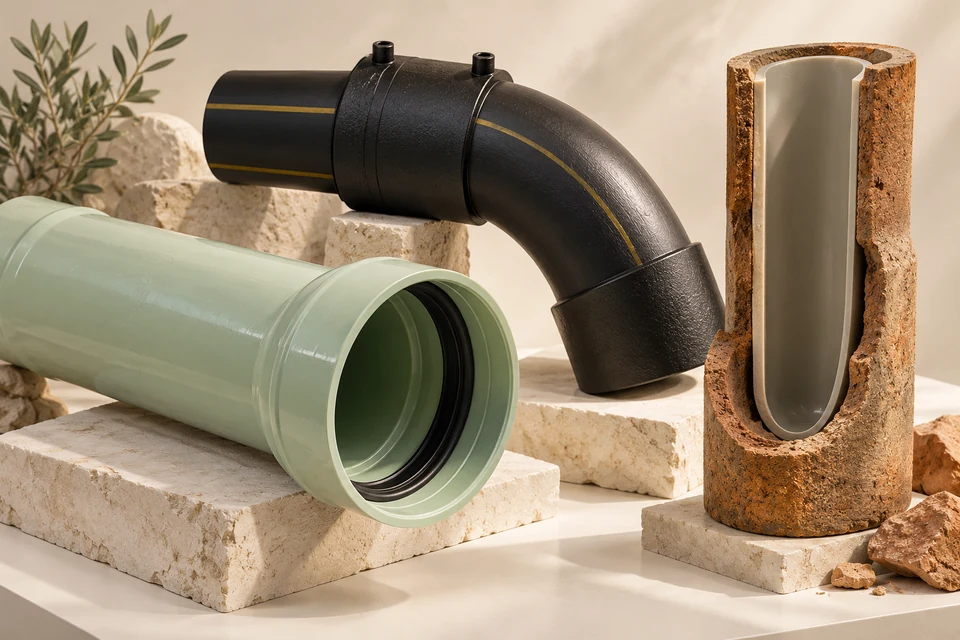
What a new sewer line is made of, and how long it should last
What new sewer lines are made of in Calgary and Alberta, from PVC and HDPE to cured-in-place liners, how long each lasts, and what shortens a new line's life.
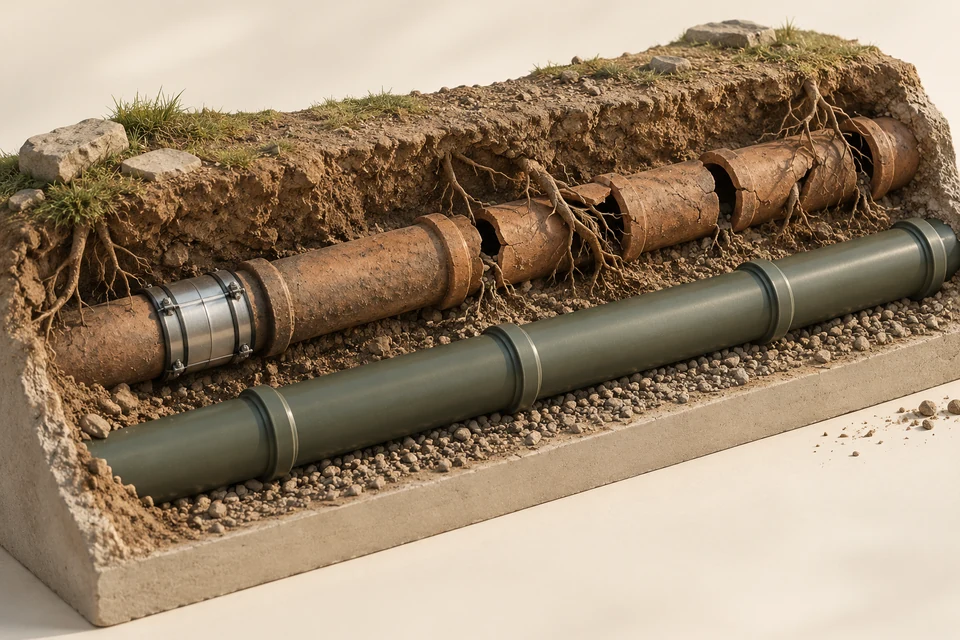
Replacement is not always the answer: how to make the call
New sewer line vs repair: the camera findings that justify full replacement, the ones that point to a repair or trenchless fix, and how to get a fair second opinion.
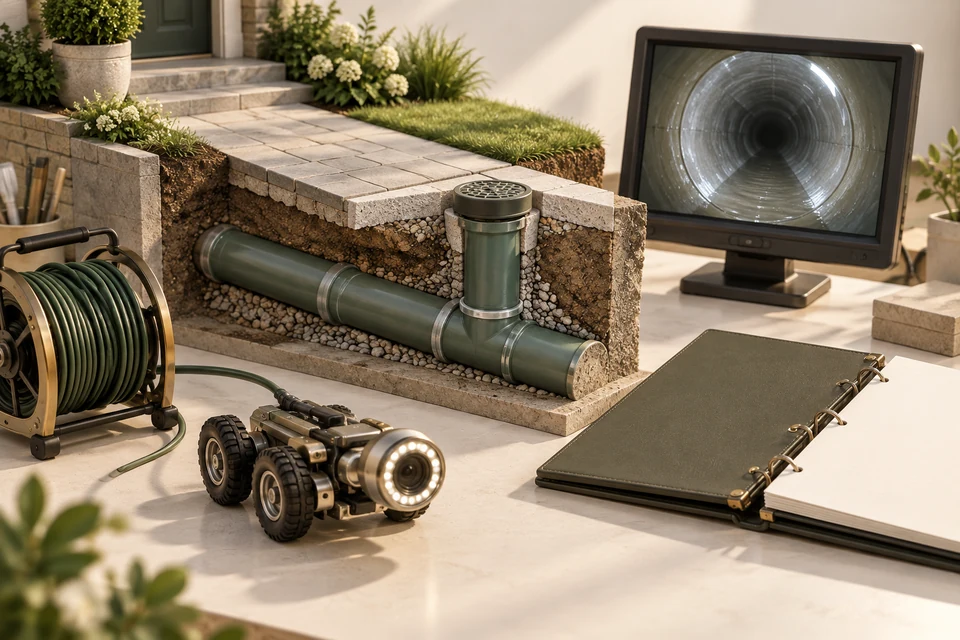
Handing over a new sewer line: inspection, records and the warranty
What to get when a new sewer line is finished: the inspection record, the after-video and what to look for in it, the as-built, and how to read the warranty.
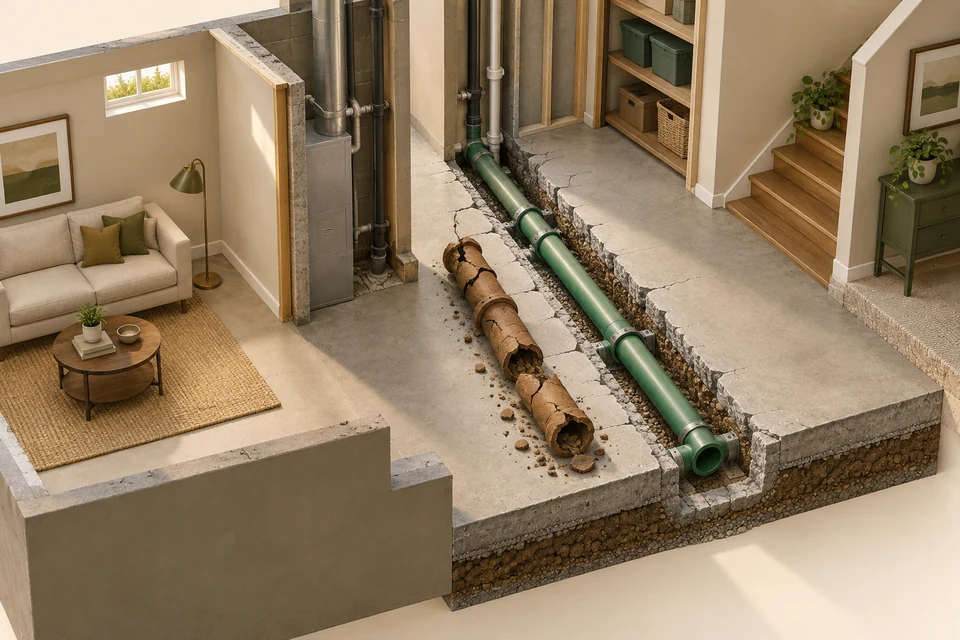
Replacing a sewer line under the basement floor
Replacing a sewer line under a basement floor or slab: how to confirm the pipe is failing, cutting the slab vs lining, what it disrupts, and 2026 planning costs.
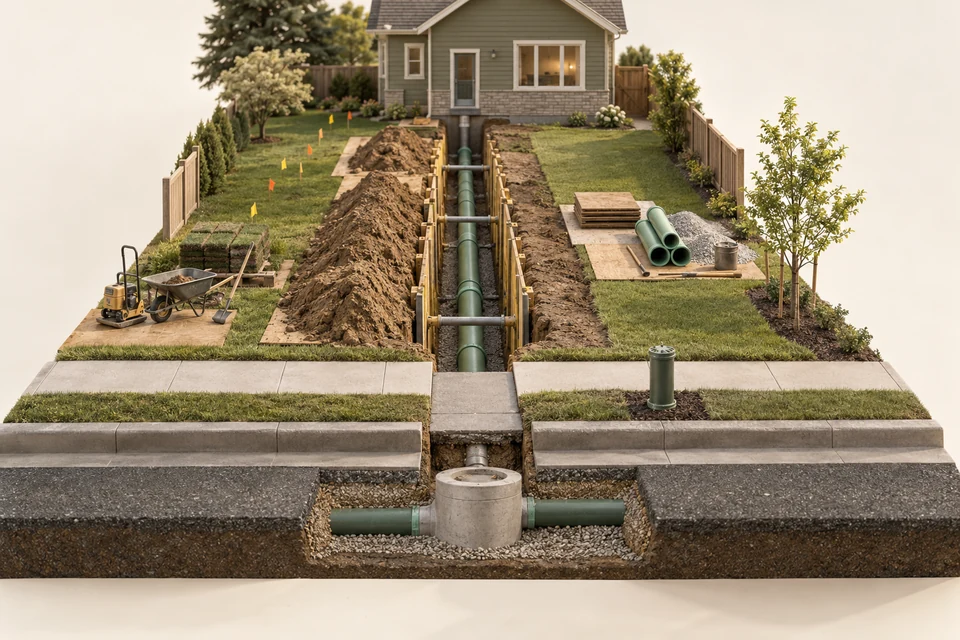
Ten steps, in order, on every new sewer line job
The new sewer line process in ten steps, from camera scope and locates to permits, excavation, inspection, backfill and records, with Calgary and Alberta rules.
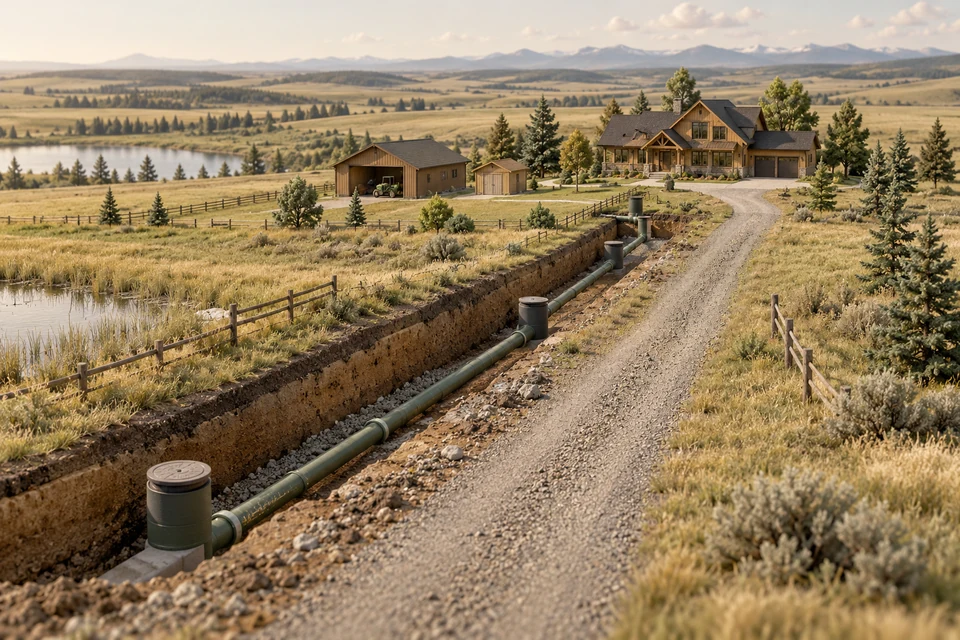
New sewer line work across the communities surrounding Calgary
New sewer lines in Airdrie, Cochrane, Chestermere, Okotoks and the counties around Calgary: who issues permits, acreage lines, private sewage and what to ask first.
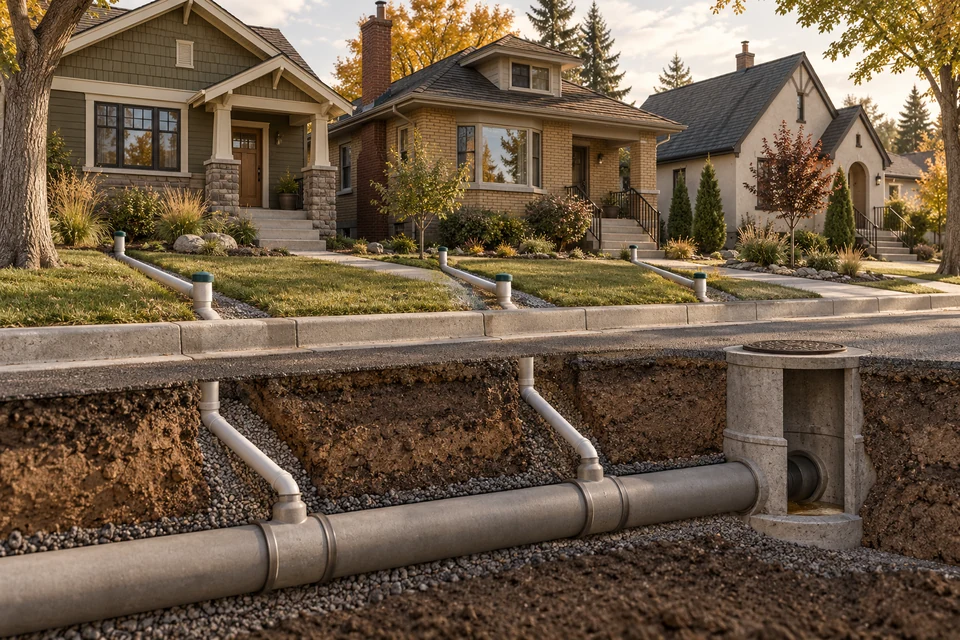
New sewer line projects across every Calgary quadrant
New sewer lines in Calgary: the older communities where laterals are aging, what City service-line records show, who owns which section, and the permits involved.
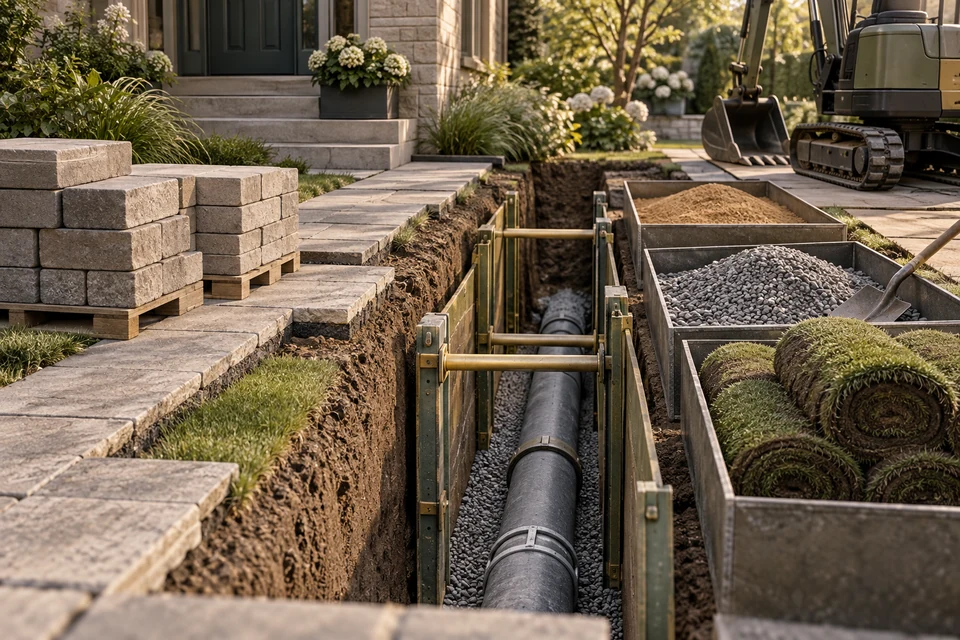
Safe sewer line excavation, and a real restoration plan
Sewer line excavation and restoration in Calgary and Alberta: locates, hand-expose zones, trench protection past 1.5 m, backfill in lifts and restoration lines.
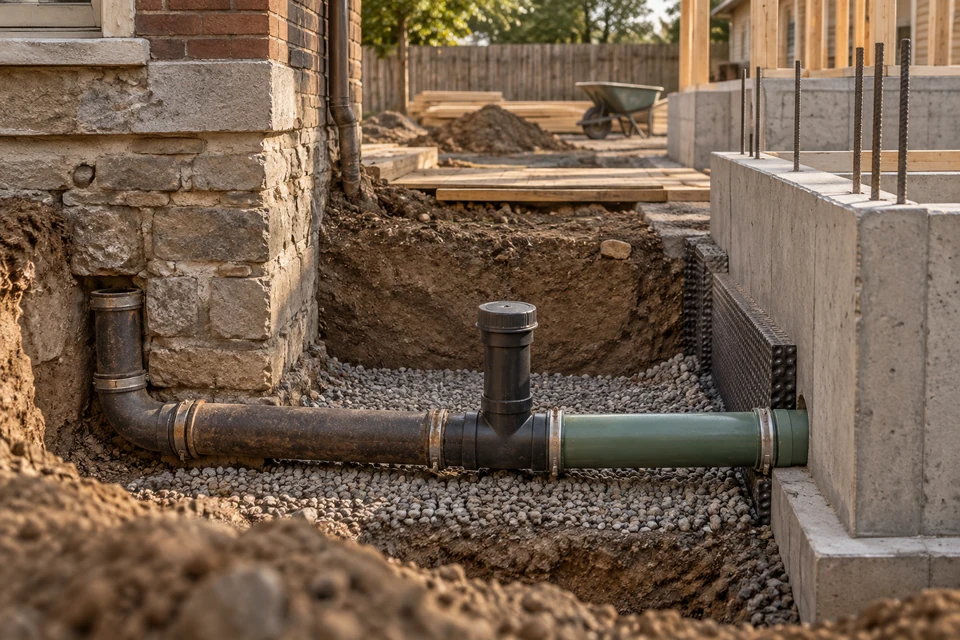
Sewer line work for infill builds and renovation projects
Sewer line work on Calgary infill and renovation projects: where it fits between demolition, foundation and rough-in, plus suites and mid-project surprises.
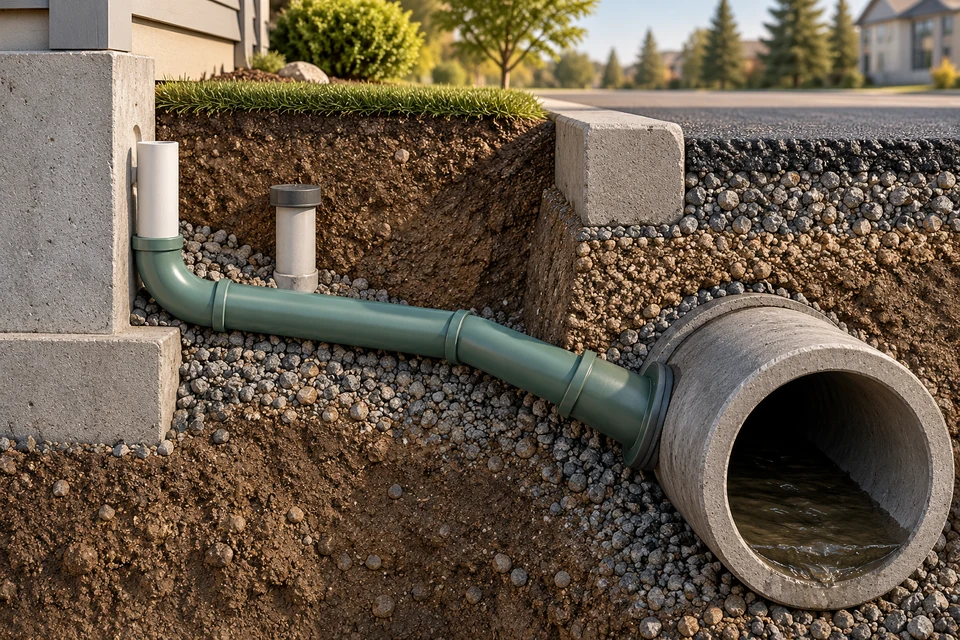
First-time sewer service connections for Calgary infill and new builds
A new sewer service connection for a Calgary infill or new build: who it is for, the City's role, sizing to the fixture load, inspection and the records to keep.
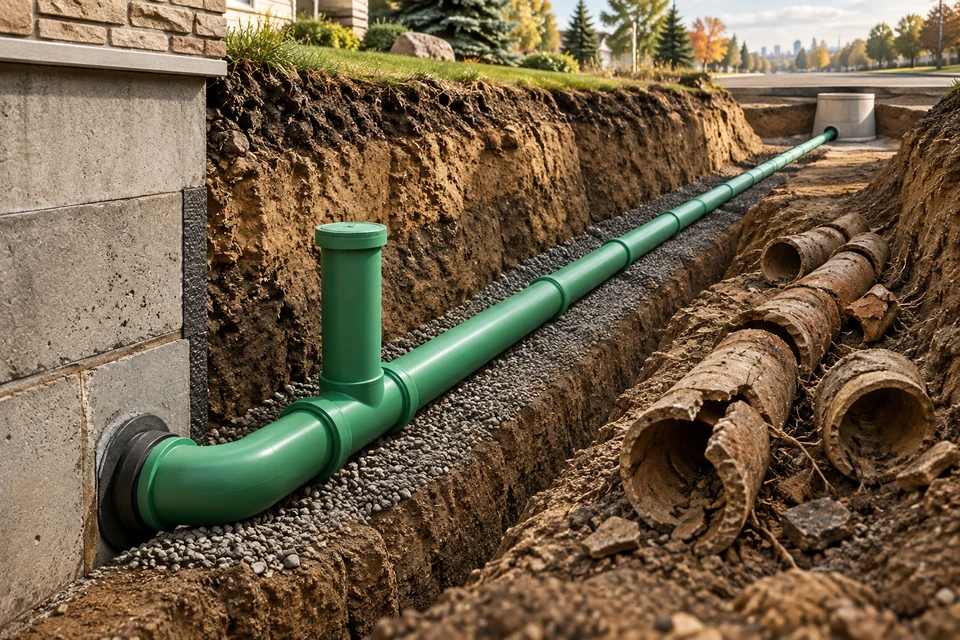
Full sewer lateral replacement in Calgary and Alberta
Sewer lateral replacement in Calgary and Alberta: when a full replacement beats spot repairs, what a complete job includes, how long it takes and what to refuse.
What a new sewer line costs in Calgary and Alberta
New sewer line cost for Calgary and Alberta homes in 2026: CAD planning ranges for a new lateral, a new service and slab work, per metre and per foot.
New Line or Repair? Check
Does your sewer need a new line or a repair? Count the camera, age, backup and planning signals that point each way, with the exact rules this check uses.
New Sewer Line Project Planner
Plan a new sewer line in Calgary or Alberta: the ten steps, locate and permit lead times, trench-protection rules, days on site and a 2026 CAD planning range.
Where NewSewerLine.ca takes new sewer line requests
The NewSewerLine.ca service area: Calgary and the towns, counties and acreages around it, what changes from place to place, and how a request is handled.
Frequently asked
How do I know if I need a new sewer line or just a repair?
A recorded camera inspection. Several failures along aged pipe, a sag, a collapse or Orangeburg point to a new line; one defect in sound pipe points to a repair.
How long does a new sewer line take to install?
Most single-family jobs are one to three working days on site once permits and locates are in hand. Preparation before the dig usually takes longer than the dig itself.
Do I need a permit for a new sewer line in Calgary?
Yes. The City lists replacing water and sewer lines in or around the home as work that needs a plumbing permit, and work in a City road right-of-way needs an excavation permit.
Will the City of Calgary pay for part of my new sewer line?
The City owns and maintains the pipe from the main to the property line; the homeowner owns the pipe from the property line to the house. Call 311 about a problem on the City side.
Can a new sewer line be installed in winter?
Yes, with frost breaking or thawing, often imported backfill and restoration that may be finished in spring. It usually costs more and takes a little longer.
Is NewSewerLine.ca a contractor?
No. It is part of HAUSE, an independent information and quote-request network. Requests go to the HAUSE desk, which replies with next steps.
Describe the problem once. Get a straight answer.
Send the symptoms and anything you already know — age of the house, what a camera found, what you have been quoted. The HAUSE Sewer desk replies with next steps and, where available, a local contractor for the job.
Sewage backing up right now? Stop using water, keep people away from the water, and do not touch electrical equipment near it.