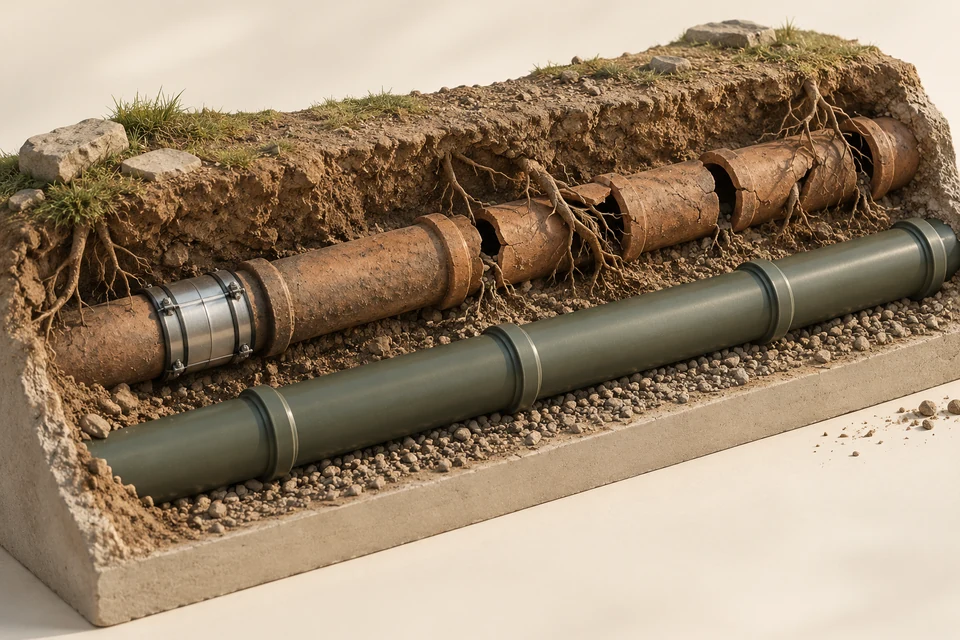
Choose a new sewer line when a recorded camera scope shows several failure points, bellies, offsets or collapsed sections, pipe that is undersized for planned use, or clay, cast iron or Orangeburg past its service life. Choose a repair or trenchless fix when there is one localised defect in sound pipe, roots at one joint, or a line that still meets sizing and grade. The footage decides, not the surface.
- You cannot make this decision from the surface: slow drains and backups say something is wrong, not where or how much.
- Several defects along aged pipe favour a new line; one defect in sound pipe favours a repair.
- A sag and a collapse are the two findings a liner cannot fix, so they push toward digging at least that section.
- Compare what each option renews, not just its price: a spot repair renews a metre, a new line renews the whole run.
- A second opinion from the same footage is cheap and often decisive.
01 /When does a full replacement make sense?
A full replacement makes sense when the pipe as a whole has failed or cannot serve what is planned, rather than when one part of it has a problem. These are the patterns that usually justify a new line:
- Multiple failure points along the line.
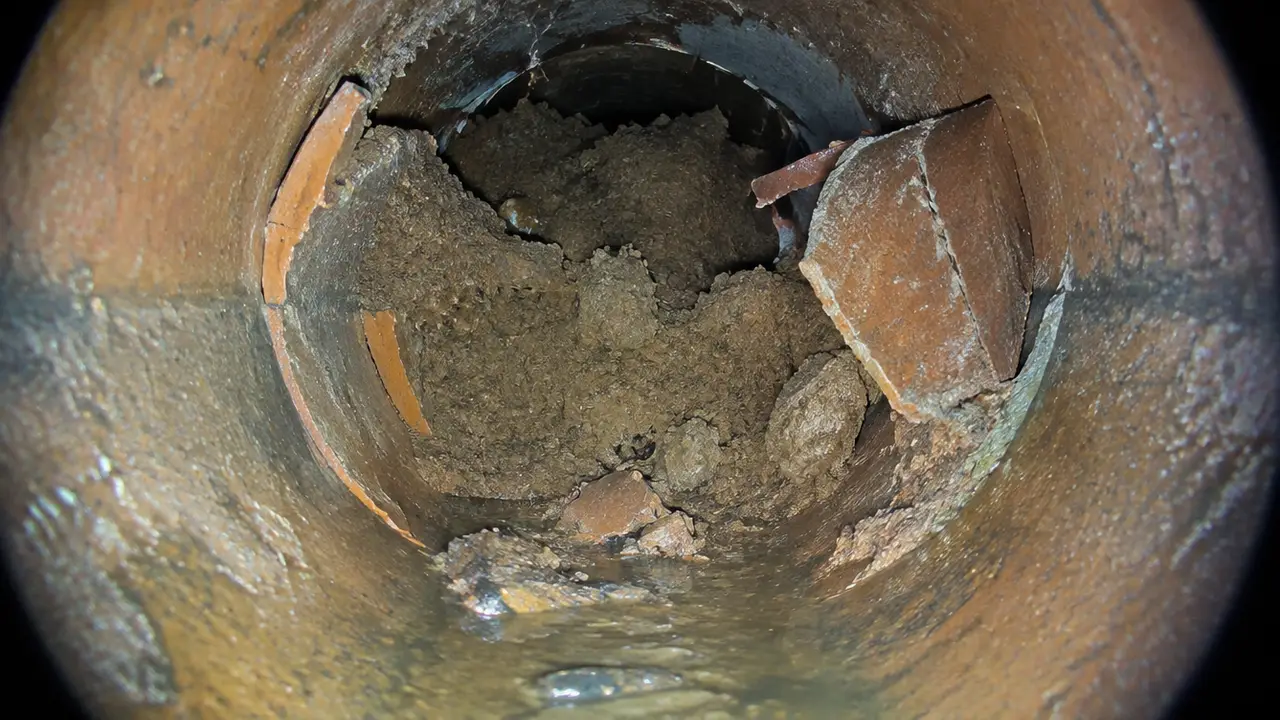
- Bellies, offsets or collapsed sections, especially in combination.
- Undersized pipe for the occupancy or fixtures being planned.
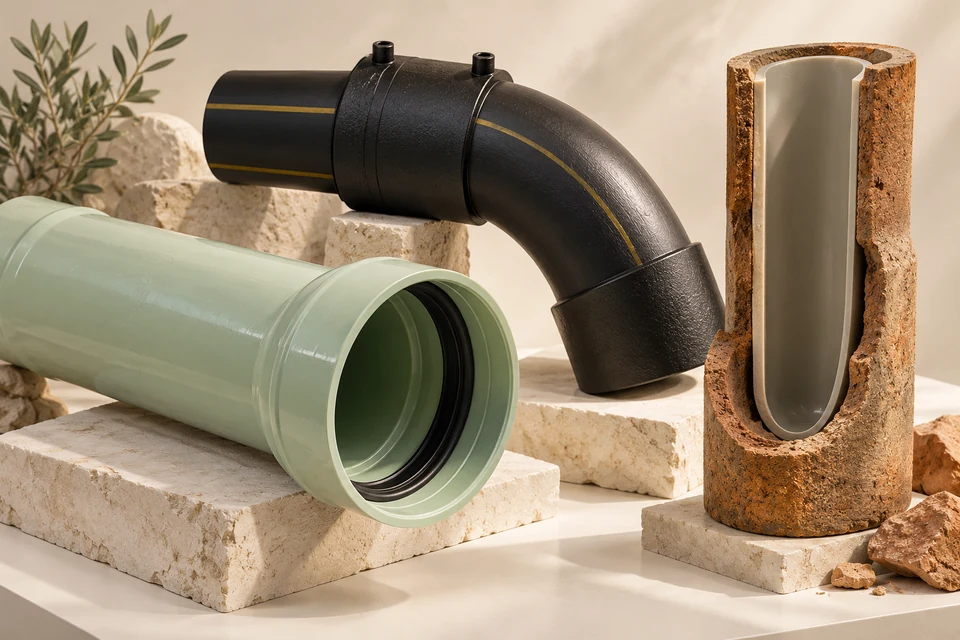
- Clay, cast iron or Orangeburg past its service life.
- A new service connection required by the municipality, for example on an infill rebuild.
- An insurance-covered replacement after a claim, where the insurer has agreed to the scope in writing.
Each of these says the same thing in a different way: fixing the visible problem leaves the rest of the pipe waiting to become the next problem. A 60-year-old clay line with cracked joints every few metres will keep producing them after one is repaired.
02 /When might a repair or trenchless fix work?
A repair or trenchless fix may be the right answer when the camera shows a line that is mostly sound. A good contractor will say so even when it means less work for them.
- A single localised break with sound pipe on either side.
- Root intrusion at one joint in otherwise good pipe.
- A structurally sound line that needs a spot patch.
- Access constraints where open cut is not practical, such as under a structure or a mature tree.
- Bursting or lining that is feasible after a full camera scope.
- A line that still meets current sizing and grade for how the property is used.
| Option | What it renews | Fixes a sag? | Typical fit |
|---|---|---|---|
| Excavated spot repair | One short section | Yes, at that spot | One defect, reachable dig |
| Sectional (point) liner | About one defect per section | No | A crack or root joint in sound pipe |
| Full-length lining (CIPP) | The whole lined length | No | Cracks, roots and joint leaks in round pipe |
| Pipe bursting | The whole burst length, can upsize | No | Broken or undersized brittle pipe, straight run |
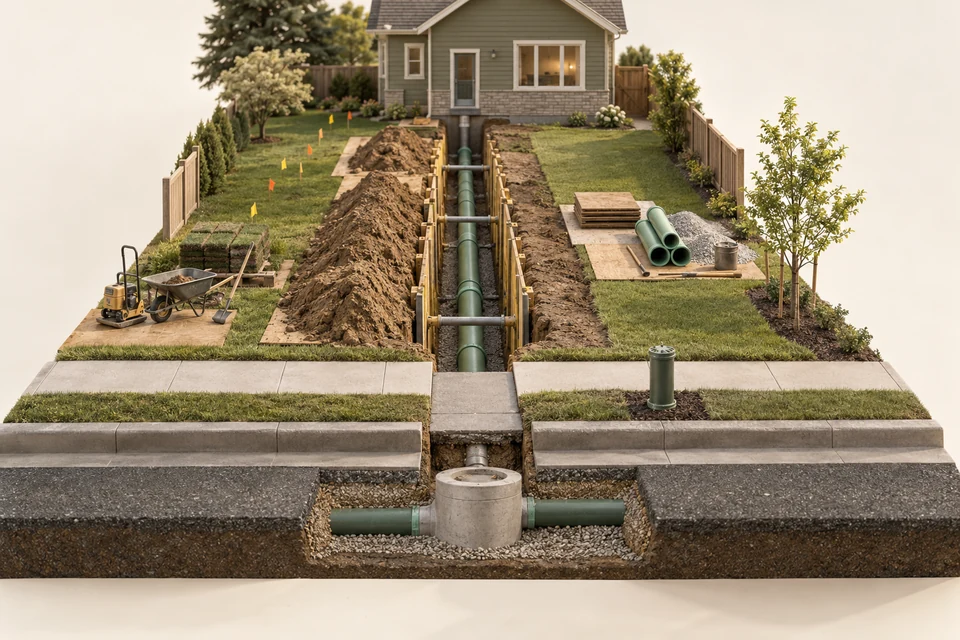
| New line by open cut | The whole line on a new grade | Yes | Sags, collapse, route or size change |
Repair-scale trenchless methods are covered in depth on TrenchlessSewerRepair.ca, bursting on PipeBursting.ca, and the method comparison in general on SewerReplacement.ca.
03 /Why can a liner not fix a sag or a collapse?
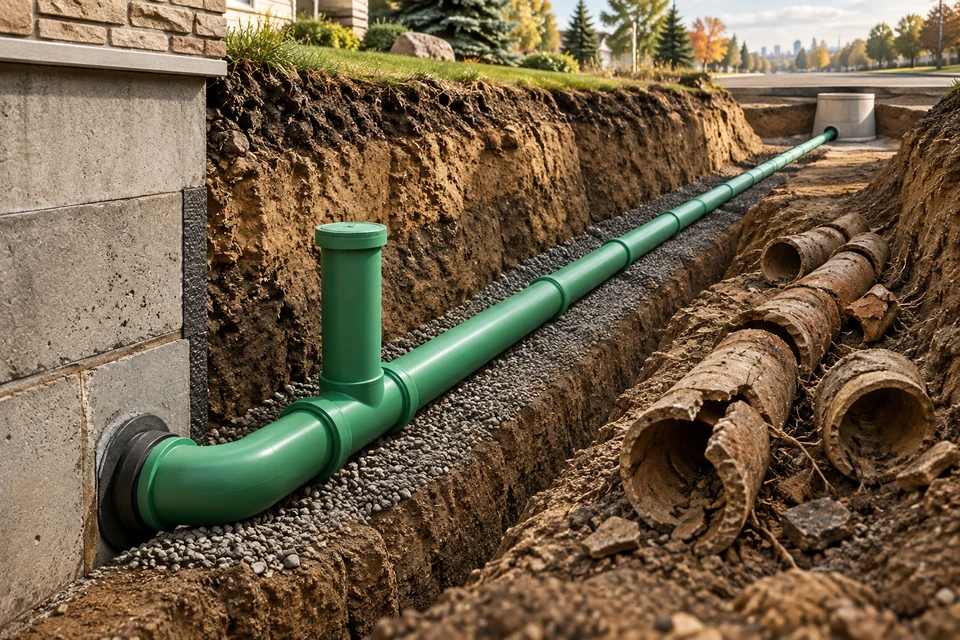
Because a liner is formed inside the existing pipe and takes its shape. Where the old pipe dips into a belly, the liner dips with it, and water and solids keep collecting in the low spot. Where the old pipe has collapsed or has a hole, there is nothing continuous for the liner to form against, so the section has to be dug out or burst through first.
That is why a line with a single sag in an otherwise sound run is often best handled as a mixed job: dig and re-lay the sagging section, and line or leave the rest. It is also why a quote that proposes lining through a documented belly deserves a direct question about how the belly will be dealt with.
04 /Why does the camera scope matter so much?
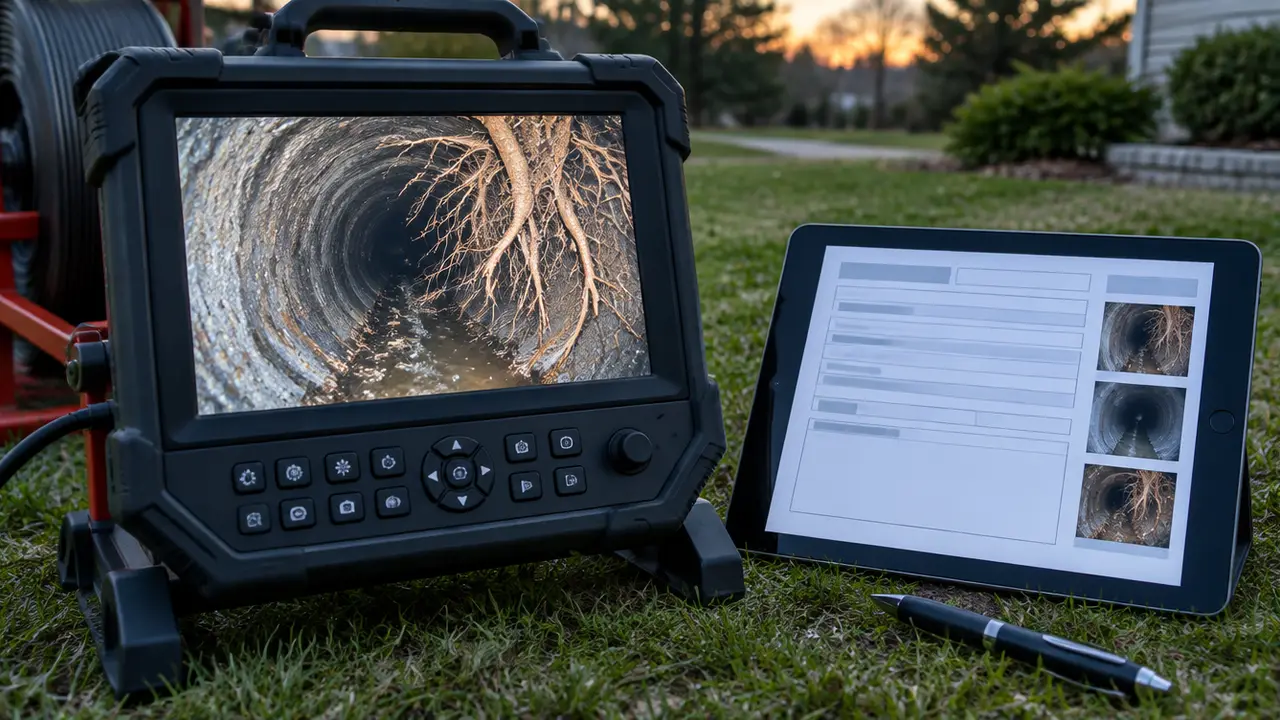
You cannot make this decision from the surface. A recorded camera scope shows where the failures are, how many there are, and whether the pipe between them is still viable. Without that footage, any recommendation, including a replacement quote, is a guess.
Ask for the footage itself, not only a summary. A useful recording shows the distance counter throughout, pauses on each defect, notes the material and any material changes, and reaches the connection at the main or explains why it stopped. A locate of the line's route and depth from the same visit turns the footage into something a contractor can quote from.
05 /How do the costs compare over time?
As 2026 planning estimates in CAD, an excavated spot repair typically quotes about $3,500 to $16,000, a sectional liner $2,500 to $6,500 for the first defect, full-length lining $9,000 to $28,000, pipe bursting $10,000 to $30,000, and open-cut replacement of a 15 to 25 m lateral $12,000 to $35,000 or more. These are the network's shared ranges, so they match the cost guide.
The cheaper option is the one that fixes the problem the first time. Two spot repairs a few years apart on a line that needed replacing can cost as much as the replacement, plus two rounds of digging, restoration and inconvenience, and the line is still old. On the other hand, replacing 20 m of sound pipe to fix one root joint spends money on pipe that had decades left. Compare what each option renews, then compare prices.
06 /What if a deadline is forcing the decision?
Three situations push homeowners to decide faster than they would like: a real estate condition, a notice from the municipality and an insurance claim after a backup. None of them changes what the footage says, but each changes what you need in hand and by when.
- A real estate condition. Get the recorded footage and at least one written quote before the condition date. Whether the seller replaces the line, credits the price or the buyer takes it on is for the parties and their lawyers; a quote built on footage gives both sides a real number instead of a guess.
- A municipal notice. Read exactly what it requires, of which section of pipe and by when, and call the municipality before booking work (311 in Calgary). A notice about the City side of a connection is not an instruction to replace your private lateral.
- An insurance claim. The Insurance Bureau of Canada describes sewer backup coverage as an optional add-on that replaces and decontaminates contents after sewers and drains back up. Whether a policy also pays toward the pipe is a separate question; get the insurer's answer in writing before you agree a scope.
Paying for the work, including insurance, financing and how tax treats a new line, is covered in paying for a new sewer line.
07 /How do I get a fair second opinion?
If you already have a scope from a contractor, a second opinion from a different contractor using the same footage is the fastest way to test a recommendation. Give them the recording and the report, not the first quote, and ask for their own recommendation and price.
- Share the footage, not the verdict
Let the second contractor read the video without being anchored by the first recommendation.
- Ask them to list the defects
Distance, type and severity for each. If the two lists differ, ask both to explain.
- Ask for both prices
A repair of what matters most, and a new line, from each contractor.
- Check the reasoning
Run the findings through the New Line or Repair? Check and compare its signal count with each recommendation.
If a new line comes out ahead, sewer lateral replacement describes what a complete job includes. If you want contractors to review what you have, send the footage and your questions.
FAQQuestions people ask
Is it better to replace or repair a sewer line?
It depends on the footage. Several defects along aged pipe, a sag, a collapse or Orangeburg favour replacement; one defect in otherwise sound pipe favours a repair.
Is sewer line lining as good as replacement?
For round, continuous pipe with cracks, roots and leaking joints, lining renews the lined length without digging. It cannot fix a sag, a collapse or a route or size change; those need digging or bursting.
Can I get a new sewer line with no digging at all?
Rarely with none at all. Pipe bursting and lining avoid a trench, but pits, connections, sags and collapsed sections usually still need some digging; lining from an existing cleanout comes closest.
How many defects justify a new sewer line?
There is no fixed number. Defects repeating along the line, especially in old clay, cast iron or fibre pipe, usually do; one or two isolated defects in sound pipe usually do not.
Should I trust a replacement recommendation from the company that did the camera inspection?
Often yes, but check it. Ask for the footage and a defect list, and get a second contractor to recommend and price from the same recording.
NETWORKGo deeper across the HAUSE Sewer network
Common sewer defects, explained by what they do to the pipe
Common sewer defects explained: roots, cracks, fractures, offset and separated joints, sags, deposits, holes and collapse, with severity and usual next steps.
Sewer root removal cost in Canada: cutting, chemicals and permanent fixes
Sewer root removal cost in Canada for 2026: planning ranges for cable cutting, jetting, camera, lining, bursting and replacement, plus cycle-versus-fix math.
Sewer line repair cost: what a spot repair should cost
Sewer line repair cost in Canada for 2026: spot repair and sectional liner planning ranges in CAD, what drives the price, and when a repair beats full replacement.