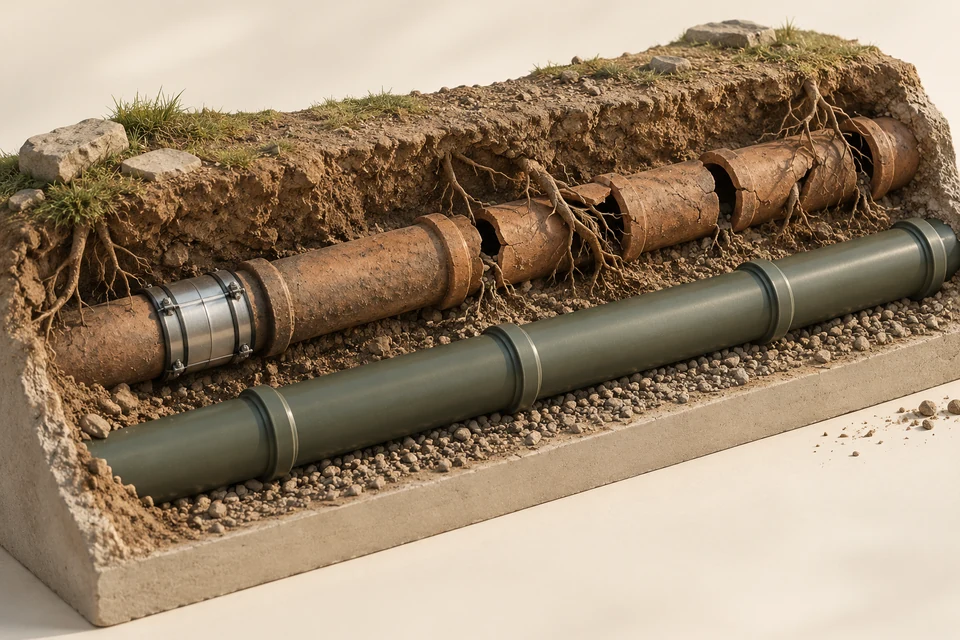
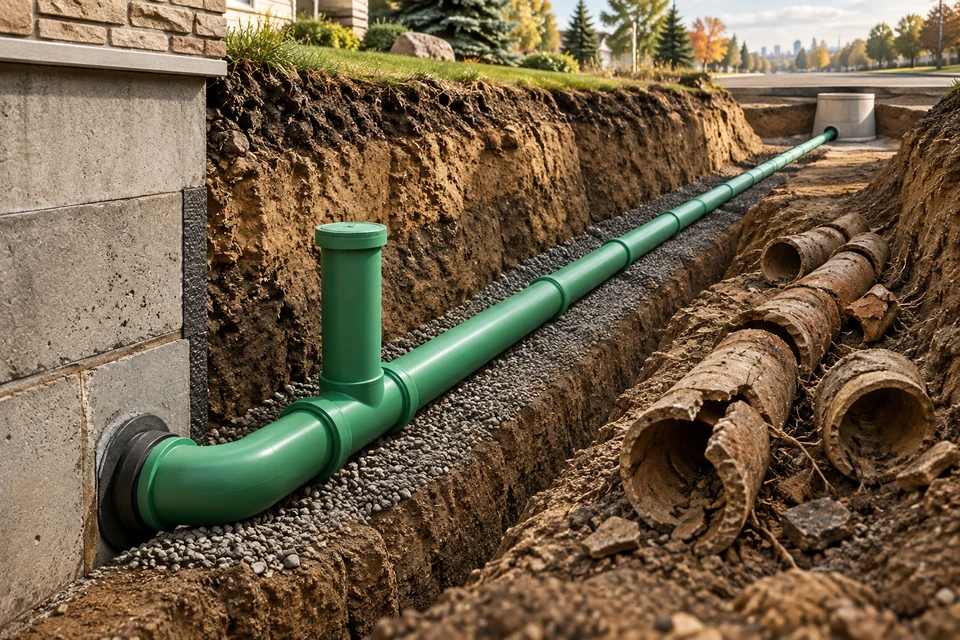
The check counts the signals in your camera findings, pipe material, age, backup history and plans that point toward a new sewer line, and lists the signals that point toward a repair. Three or more new-line signals means a new line makes sense. Below that, a line with findings reads as price both (one or two signals) or repair the defect (none), and a line with no findings reads as keep and maintain.
- No footage, no verdict: without a recorded camera inspection the result is marked provisional and the first step is always a scope.
- Orangeburg pipe and a planned rebuild each add 3 signals on their own, because both usually end in a new line regardless of anything else.
- Defects along most of the line add 2; two or three locations add 1; a single location adds nothing.
- A sag and a collapse are the findings a liner cannot fix, so both add signals and a next step to dig at that spot.
- The repair column matters as much as the score: one defect in sound pipe is the textbook case for keeping the line.
New Line or Repair? Check
01 /How do I use the New Line or Repair? Check?
Answer eight questions and press Show my result. The first question matters most: whether the line has been camera-inspected with a recording. The rest describe the pipe (material and age), what the camera saw, how widespread it is, how often the line has backed up, what you plan to do with the property, and whether something outside your control is forcing a decision.
- Camera-inspected? Yes, with footage or a report; or not yet.
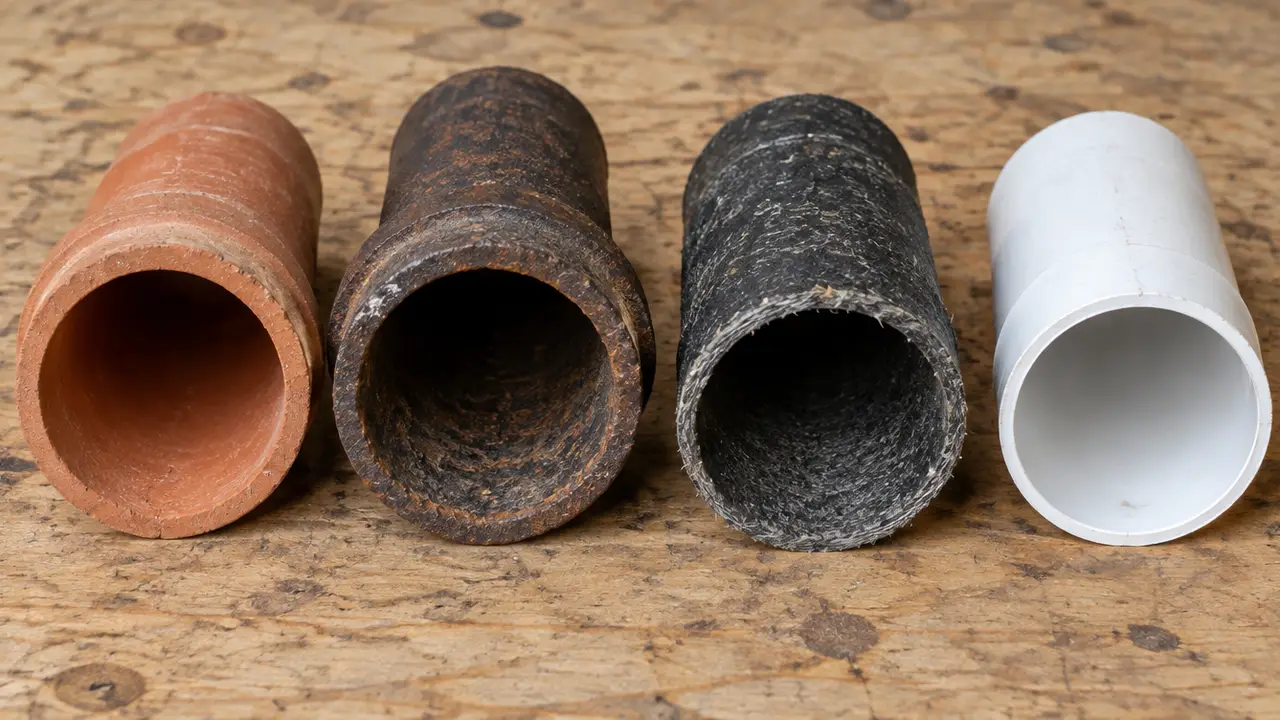
- Pipe material: vitrified clay, cast iron, bituminous fibre (Orangeburg), concrete, PVC or ABS plastic, or not sure.
- Age of the line: under 25 years, 25–50, 50–70, over 70, or not sure.
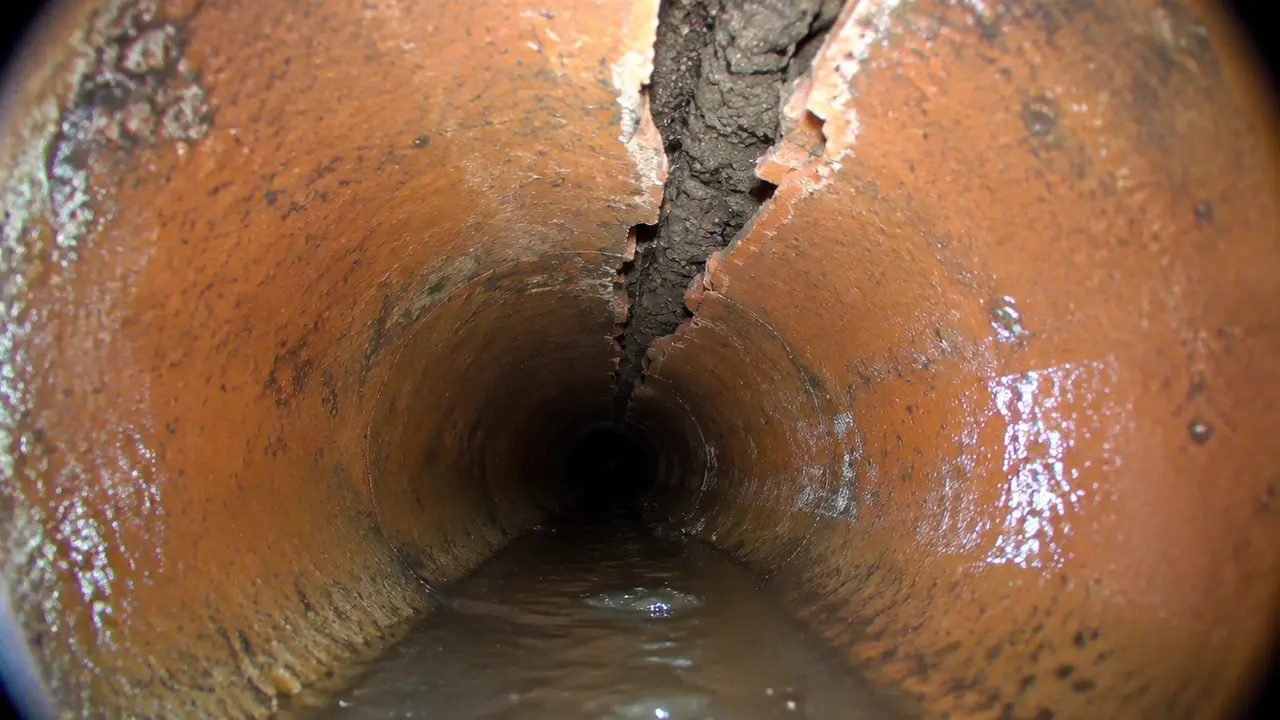
- Camera findings (tick any): roots at one joint, roots at several joints, cracks, offset or separated joints, a sag or belly holding water, a collapse, break or hole, heavy scale or corrosion, deformed or flattened pipe.
- How many places: one location, two or three, or along most of the line.
- Backups in the last two years: none, one, or two or more despite cleaning.
- Plans: no change, adding a suite or more fixtures, or demolishing and rebuilding.
- Anything forcing a decision: a real estate condition, a municipal notice, or an insurance claim after a backup.
The defaults describe a common first visit: a clay line 25 to 50 years old, camera footage in hand, roots at one joint, one location, no backups, no change of use. That combination returns Repair the defect with no new-line signals, which is the honest answer for it. Change one input at a time to see which facts move the result.
02 /Which signals point to a new line, and how many does each add?
Each signal adds a fixed number of points and is printed in the result with its points in brackets, so you can see exactly why the score is what it is. Nothing subtracts points; the repair column is listed separately instead of being netted off.
| Signal | Points | Why it counts |
|---|---|---|
| Bituminous fibre (Orangeburg) pipe | +3 | It deforms and delaminates with age and is replaced, not repaired |
| Clay, cast iron or concrete over 70 years old | +2 | The pipe between today's defects is near the end of its life too |
| Clay, cast iron or concrete 50–70 years old | +1 | Remaining life is limited even where the pipe has not failed |
| Findings along most of the line | +2 | Repairing one spot leaves the next one waiting |
| Findings in two or three places | +1 | Add up the repairs before assuming they are cheaper |
| Collapse, break or hole in one place | +1 | Must be dug out or burst through; a liner cannot form across it |
| Collapse, break or hole plus wider defects | +2 | The line is failing structurally, not just leaking at joints |
| Sag or belly holding water | +1 | A liner follows the old grade, so that section has to be re-laid |
| Deformed or flattened pipe | +1 | Lining needs a round, continuous host pipe |
| Heavy scale or corrosion in cast iron | +1 | The bottom wall under the scale can be thin |
| Roots at several joints | +1 | Several open joints, not one |
| Two or more backups in two years | +1 | Maintenance is no longer holding the line |
| Demolishing and rebuilding | +3 | The new building sets the size, and the municipality decides whether the old service can be reused |
| Adding a suite or more fixtures | +1 | More load, plus backflow-protection rules to check |
Two details are easy to miss. The extent signals only count when at least one finding is ticked, so choosing "along most of the line" with nothing ticked adds nothing. And the age signals only apply to the older materials: a 60-year-old plastic line does not score for age, because PVC and ABS were not in common house-sewer use that long ago and an answer like that usually means the age or the material is wrong.
03 /Which signals point to a repair?
The right-hand column of the old decision, keeping the line, is printed as its own list. These lines do not change the score; they are the reasons a contractor who recommends a repair would give you, and they are worth reading even when the score says new line.
- One defect with pipe on either side (any finding in one location except a collapse): a spot repair or sectional liner is the usual first price.
- Roots at a single joint as the only finding: can be cut and sealed at that joint.
- Plastic pipe: usually far from end of life, so a defect is more often fixed where it is.
- No defects recorded: there is nothing to replace yet.
- No change of use: the existing size is not a reason to replace.
- No backups in two years.
04 /How does the check decide the verdict?
The verdict comes from the score, with one override. If you answered that the line has not been camera-inspected, the verdict is Camera first whatever else you entered, and the score line is replaced with "Provisional — no footage yet". Otherwise the first matching rule wins:
| Condition | Verdict shown | Badge |
|---|---|---|
| No camera inspection yet | Camera first | Caution |
| 3 or more new-line signals | A new line makes sense | 3 or more signals |
| Fewer than 3 signals and no findings ticked | Keep the line and maintain it | Shows the signal count |
| 1 or 2 signals, at least one finding ticked | Repair or trenchless may be enough — price both | 1–2 signals |
| 0 signals, at least one finding ticked | Repair the defect | No new-line signals |
Worked examples, straight from the code. A 50–70-year-old clay line with cracks, offset joints, a sag and roots at several joints along most of the line, plus two backups, scores 6: age 1, extent 2, sag 1, roots 1, backups 1. That reads A new line makes sense. The same line with only roots at one joint and no backups scores 1 for age and reads price both. An Orangeburg line scores 3 on material alone.
05 /What do the next steps in the result mean?
Under the two lists the check prints the next steps that apply to your answers. They are practical, not sales prompts:
- No footage: book a recorded camera inspection with a locate. This step is listed first.
- A collapse in one place: price a dig at the broken spot, then camera the rest before deciding on more.
- A sag in one place: ask for a price to dig and re-lay only the sagging section.
- 3 or more signals: plan the project in the New Sewer Line Project Planner.
- 1–2 signals: ask one contractor to price the repair and another to price a new line, from the same footage.
- Real estate condition: have the footage and a written quote in hand before the condition date, and let the lawyers decide how the cost is handled.
- Municipal notice: read what it requires and by when, and call the municipality (311 in Calgary) before booking work.
- Insurance claim: backup damage falls under optional sewer backup coverage; the pipe is a separate question, so ask the insurer in writing.
The insurance line reflects how the Insurance Bureau of Canada describes the coverage: sewer backup coverage replaces and decontaminates contents after sewers and drains back up, and it is an optional add-on, not a pipe warranty. What your own policy says is the only answer that counts.
06 /What are the limits of this check?
The points and thresholds are editorial rules written for this site, based on how defects and pipe age are usually weighed when a replacement is quoted. They are not an engineering standard, a condition rating system such as NASSCO PACP, or a failure-rate model, and they do not know your depth, soil, surface or access. Those matter for how the work is done and what it costs, not for whether the pipe is worth keeping, which is why they live in the planner instead.
If you already have a scope from one contractor and a replacement quote you are unsure about, the check is a good way to structure a second opinion: list the findings, see how many signals they add up to, and ask the second contractor to agree or disagree point by point. The reasoning behind the rules is set out in full in new line vs repair, and what a full replacement involves is in sewer lateral replacement. When you want contractors to look at it, send the footage and your answers.
FAQQuestions people ask
Why does the check refuse to give a firm answer without a camera inspection?
Because every signal it counts comes from the footage. Surface clues such as slow drains or a backup tell you something is wrong, not where, how many places or whether the pipe between them is sound.
My line is clay and 60 years old but the camera found nothing. What does the check say?
It adds one signal for age, but with no findings ticked the verdict is keep the line and maintain it, with a re-inspection on a schedule. Age alone rarely justifies digging up a working line.
Does a planned basement suite mean I need a new sewer line?
Not automatically. It adds one signal because the load rises and backflow-protection rules apply to each dwelling unit. Whether the existing line suits the new use is a question for the designer and the permit review.
Why is a rebuild worth three signals?
A new building is serviced for its own fixture load, and the municipality decides whether the old service can be reused. In infill practice a new service is common, so the check treats a rebuild as a strong signal on its own.
Can I use this check on a line that was already relined?
Only loosely. A relined section behaves like new pipe, so enter the condition of the unlined parts. Ask the contractor who lined it for the lining records and the warranty.
NETWORKGo deeper across the HAUSE Sewer network
Sewer line repair cost: what a spot repair should cost
Sewer line repair cost in Canada for 2026: spot repair and sectional liner planning ranges in CAD, what drives the price, and when a repair beats full replacement.
What is hydro jetting, and how does it clean a sewer line?
What hydro jetting is: how a sewer jetter uses rear-facing jets to pull a hose up the line, scour the pipe wall and flush debris out. Plain physics.
Common sewer defects, explained by what they do to the pipe
Common sewer defects explained: roots, cracks, fractures, offset and separated joints, sags, deposits, holes and collapse, with severity and usual next steps.