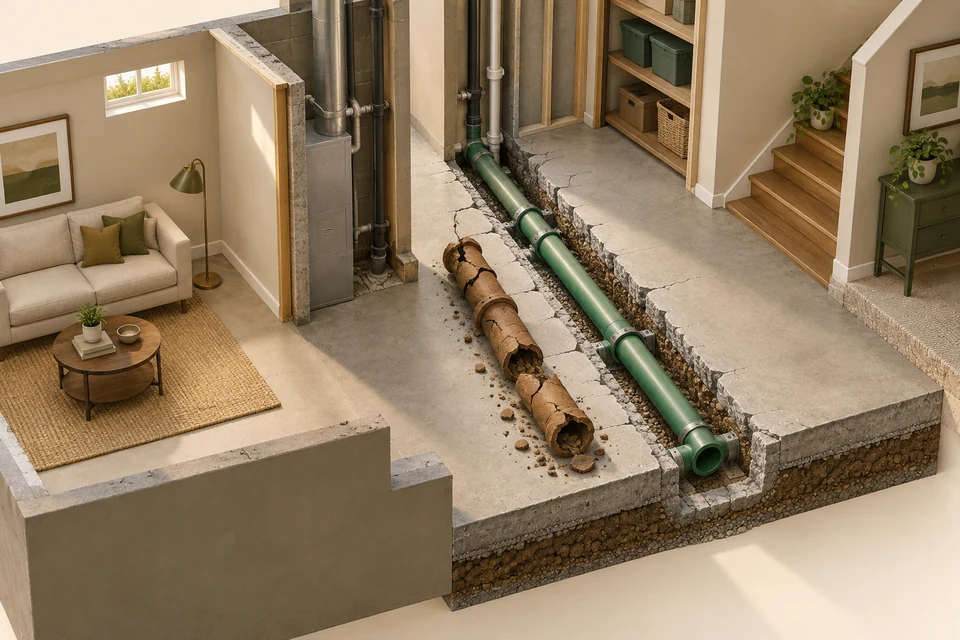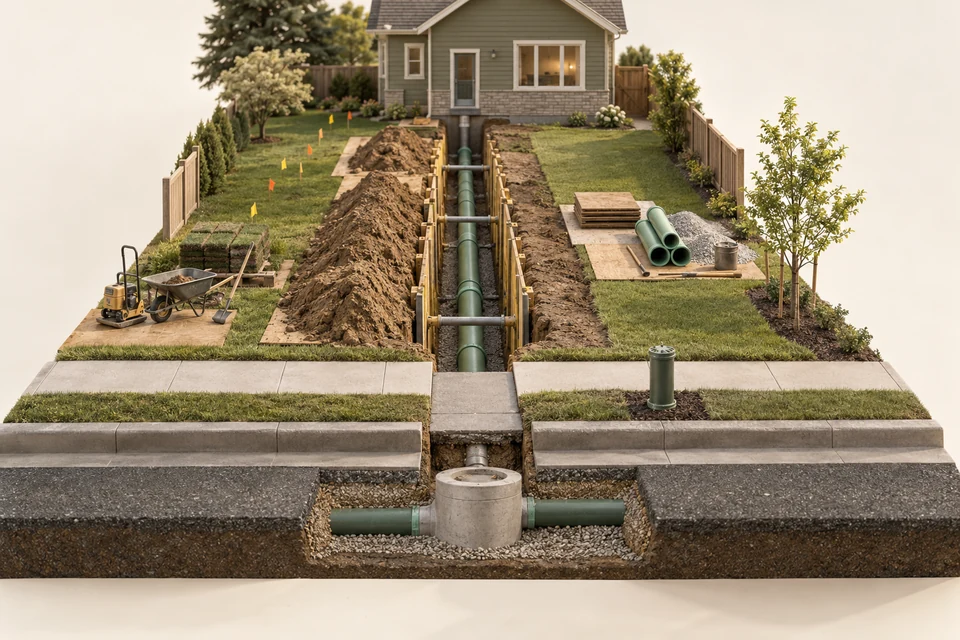
A new sewer line job runs in ten steps: an on-site camera scope, utility locates, a route plan, a written line-item quote, permits, a protected excavation, installation of the new pipe, an inspection of the open trench, backfill in compacted lifts, and cleanup with records. Skipping or reordering any of them, especially inspecting after backfill, is where most problems start.
- Steps one to five are preparation and usually take longer than the dig itself.
- Locates need at least three full working days of notice in Alberta, and your own sewer line is not marked by the one-call.
- A written quote should itemise pipe, method, permits, restoration and exclusions before any permit is pulled.
- The trench is inspected open, before backfill: never covered blind.
- The job is finished when you hold the after-video, the inspection record and an as-built, not when the machine leaves.
01 /Why does the order of the steps matter?
A new sewer line is not a mystery, but it is a sequence. Each step produces something the next one depends on: the scope produces footage for the quote, the locate produces marks for the route plan, the permit allows the dig, and the inspection allows the backfill. Doing them out of order either wastes money, like quoting without footage, or hides problems, like backfilling before an inspection.
The same ten steps apply to a lateral replacement, a new service connection and renovation-driven work. What changes is who is involved at each step and how long it takes.
02 /Steps 1 to 4: how is a new line scoped, located, planned and quoted?
- 01 Scope
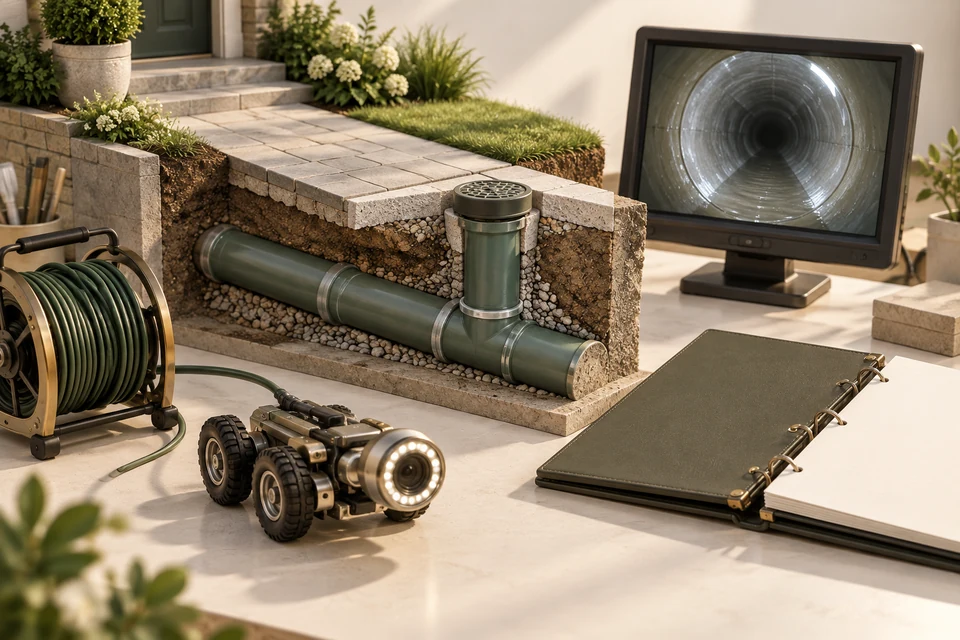
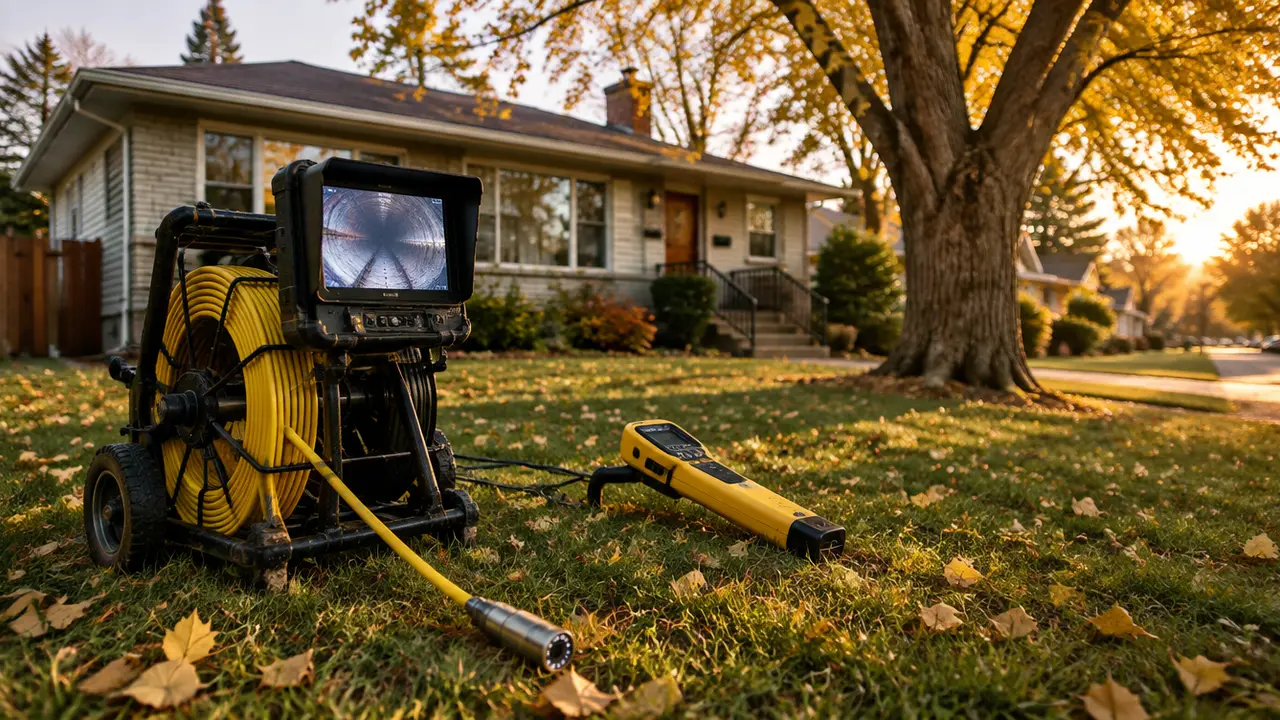
An on-site walk-through and a recorded camera inspection confirm the failure or the need for a new connection. A good scope also locates the line: a sonde in the camera head lets the technician mark the route and depth on the surface. You should receive the footage, not just a verdict.
- 02 Locate utilities
A locate request goes to Utility Safety Partners, Alberta's one-call service, so gas, power, telecom and other registered utilities are marked before digging. The service asks for at least three full working days of notice for a routine request, and five for large projects; in September 2026 its site warned of 5 to 10 business days during high volume. Customer-owned lines, including your sewer and water service, are not registered with it and need a private locator.
- 03 Route plan
Depth, grade and the connection point are mapped against the marked utilities to avoid conflicts and minimise surface disruption: where the trench or pits go, where the machine and spoil sit, how crossings are exposed, and whether a tree root zone or structure forces a change.
- 04 Written quote
A line-item quote with pipe size and material, method, length, the cleanout, permits, restoration scope item by item, the schedule and the exclusions. This is the document you compare, so every quote should describe the same scope.
If a camera scope and a second opinion are all you need at this stage, the New Line or Repair? Check helps you read the footage before committing to step five.
03 /Step 5: which permits are needed?
Permits are pulled and posted before work begins. In Calgary, the City's trades permits page lists replacing water and sewer lines in or around the home as work that needs a plumbing permit. A homeowner permit is only available to an owner who lives in the home and does the work personally; when a contractor does the work, the contractor applies. Any digging into a City road right-of-way needs an excavation permit, which the City says can be applied for up to two weeks before the start date and normally takes up to two business days to process, or up to ten where recently paved roads are affected.
Outside Calgary, the Government of Alberta says permits are available through municipalities accredited to administer the Safety Codes Act, and through accredited agencies overseen by the Alberta Safety Codes Authority in municipalities that are not accredited. The Alberta service area page explains what to ask in the towns and counties around Calgary.
04 /Steps 6 and 7: how are the excavation and installation done?
- 06 Excavation
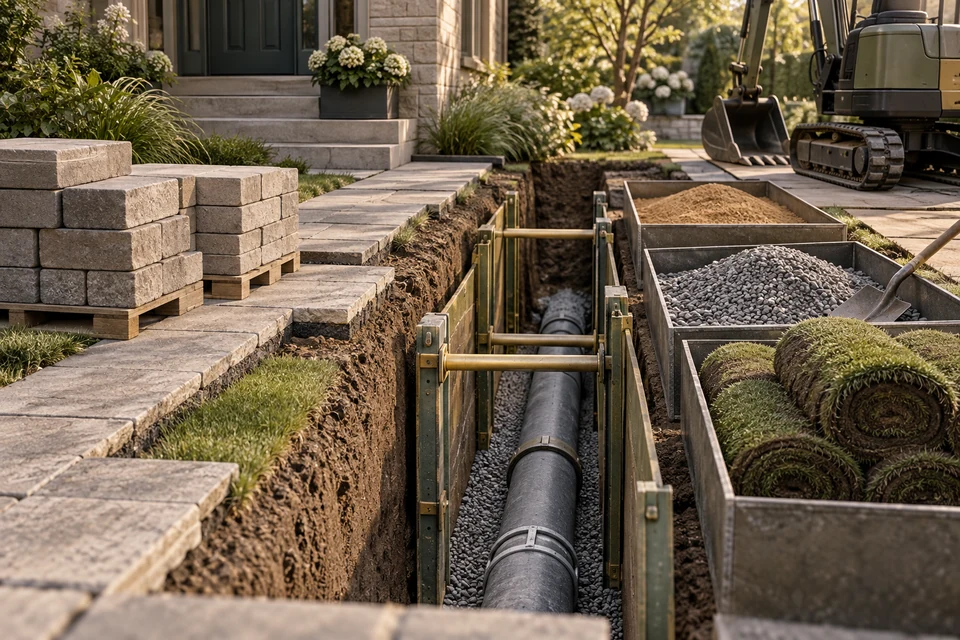
The trench or pits are dug with protection that matches depth and soil. In Alberta, once a worker is in an excavation deeper than 1.5 m and closer to the wall than its depth, the OHS Code requires cut-back walls, a temporary protective structure or both, with spoil at least 1 m back from the edge. Marked utilities within the hand-expose zone are uncovered by hand first. Driveways and lawns that are staying are protected.
- 07 Installation
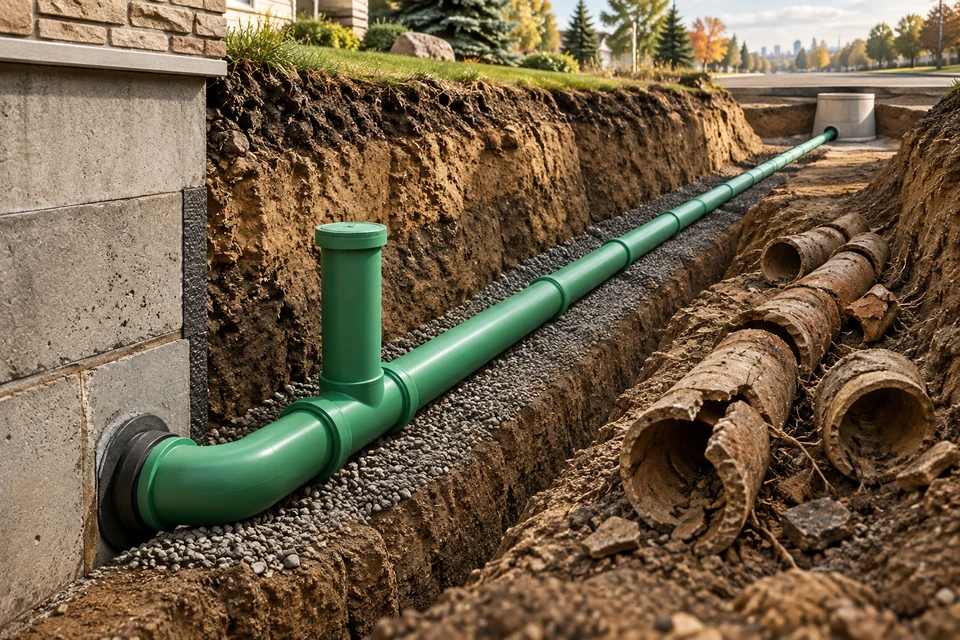
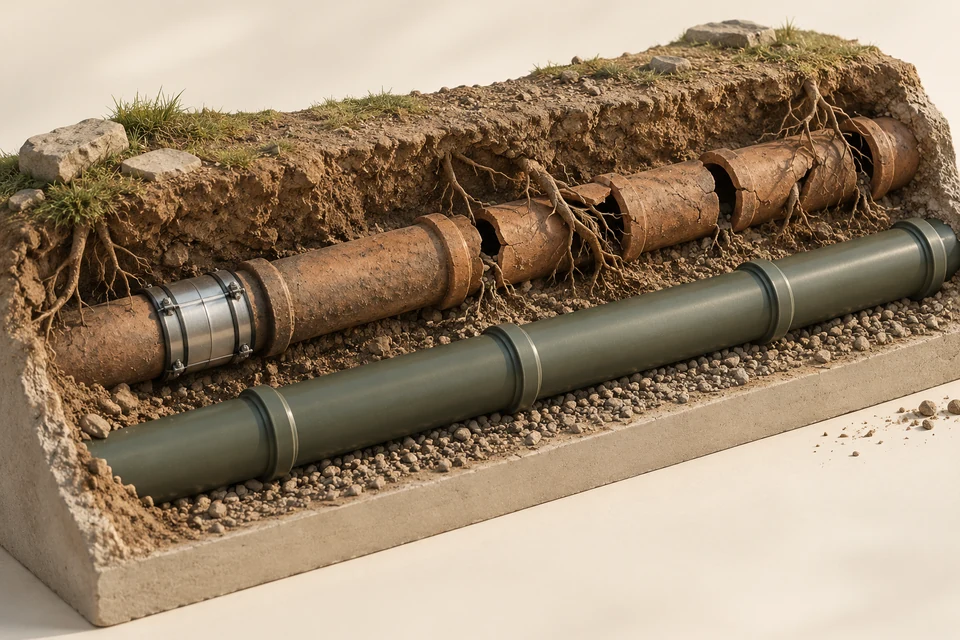
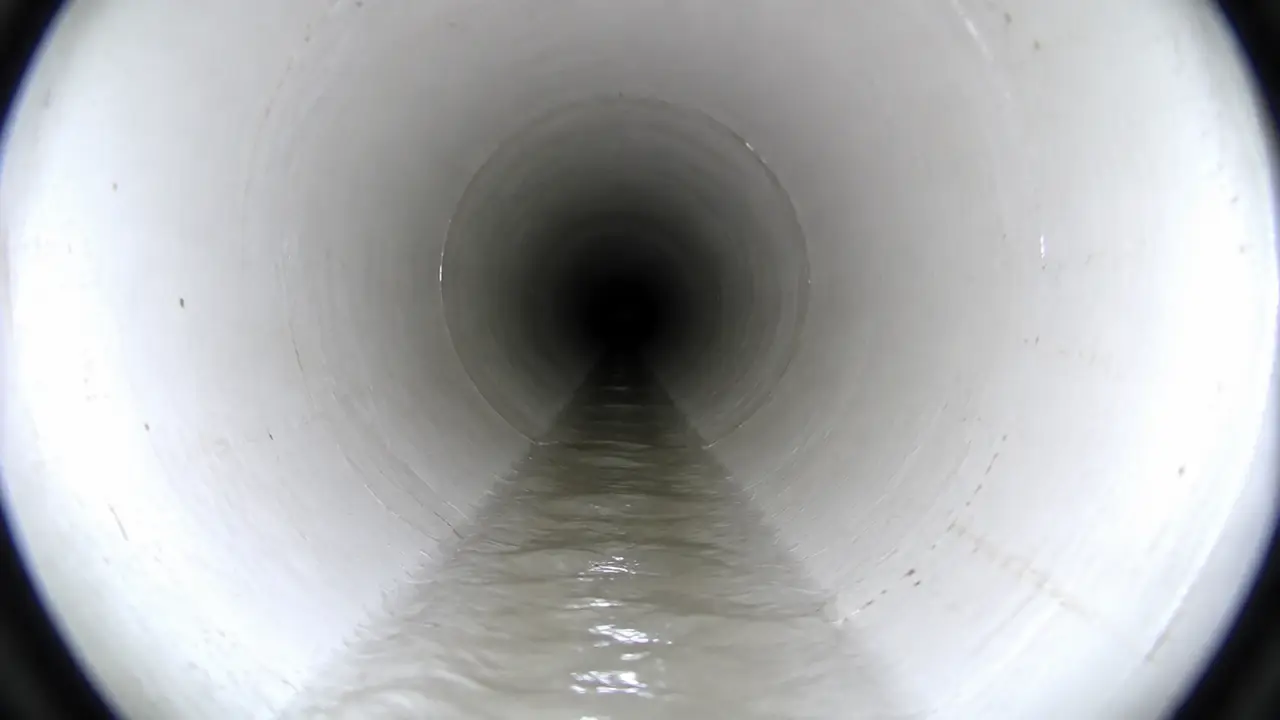
The old pipe is removed where conditions allow, or capped and recorded where a section has to be abandoned. The new pipe, usually PVC, is laid on proper bedding at a steady grade and connected at both ends: the house stub and the municipal connection. A cleanout is added near the foundation if there is not a usable one.
What each protection option looks like, and how restoration is planned alongside the dig, is in excavation and restoration.
05 /Steps 8 to 10: how is the new line inspected, backfilled and handed over?
- 08 Inspection
The inspector sees the pipe with the trench open, before any backfill, and checks the bedding, grade and connections. For a Calgary homeowner permit the City lists a rough-in inspection once drainage and venting are installed and a final inspection once fixtures are ready. Whoever holds the permit books the inspection.
- 09 Backfill
Bedding material around the pipe, compacted lifts to bring the trench back up, and suitable fill to finish grade. This is the step that decides whether the surface settles later.
- 10 Cleanup and records
A site walk-through, an after-video of the new line from the cleanout to the connection, the inspection record, an as-built sketch with depth and cleanout locations, and a written restoration plan for anything not finished the same day.
Step ten is the one most often skipped, and the one that protects you longest. Handover and warranty lists what the closing package should contain and what a warranty on a new line should say.
06 /How long does the whole process take?
For a single-family lateral, the dig itself is usually one to three working days once permits and locates are in hand, and one to two for trenchless work. The preparation before it, from first scope to permit, often takes a few weeks for planned work, depending on how quickly quotes come back, how busy the locate service is and how long the permit takes. Winter, deep lines, long runs and City-side work stretch every step.
| Step | Typical time | What controls it |
|---|---|---|
| Scope and quotes | Days to a couple of weeks | Contractor availability, second opinions |
| Locates | At least 3 full working days of notice | Utility Safety Partners volume, season |
| Permits | Days, longer with road right-of-way work | The permit office |
| Excavation and installation | 1–3 working days open cut; 1–2 trenchless | Depth, length, surfaces, weather |
| Inspection | Booked around the open trench | Inspector scheduling |
| Backfill and restoration | Same day to weeks | Concrete cure, landscaping, season |
Emergencies compress the front of the process but do not remove it: locates and permits still apply, although emergency arrangements exist, and your contractor should explain them. To see the steps laid out with your own length, depth and surfaces, use the project planner, and when you want the process priced, send your details.
FAQQuestions people ask
What is the first step in getting a new sewer line?
A recorded camera inspection with a locate of the line's route and depth. Every later step, from the quote to the permit, depends on what the footage shows.
Who requests the utility locates for a sewer line job?
Usually the contractor, through Utility Safety Partners, with at least three full working days of notice. Ask to see the ticket, and ask who is arranging the private locate for your own lines.
Can the inspection happen after the trench is filled in?
It should not. The inspector needs to see the pipe, bedding and connections with the trench open. Backfilling first means nobody can confirm what went in the ground.
How many days will I be without a toilet during a sewer line replacement?
Plan for no drains for part of the time on site, from several hours to a day or more on open-cut jobs. Ask the contractor for the no-use window in writing.
What records should I get at the end of a new sewer line job?
An after-video, the permit and inspection record, an as-built sketch with depth and cleanout locations, the warranty in writing and the restoration plan for anything still to finish.
NETWORKGo deeper across the HAUSE Sewer network
Sewer line replacement cost: open-cut vs trenchless, line by line
Sewer line replacement cost in Canada for 2026: open-cut, CIPP lining and pipe bursting planning ranges in CAD, per-metre math, line items and what moves price.
Main sewer line cleaning: what is actually involved
Main sewer line cleaning explained: how pros access the line, cable vs jetting, camera proof, how long it lasts, and what a complete job should include.
Should you scope the sewer before buying a house?
When a sewer scope before buying a house is worth it, which homes need one most, how to fit it inside a condition period, and what to do with the result.