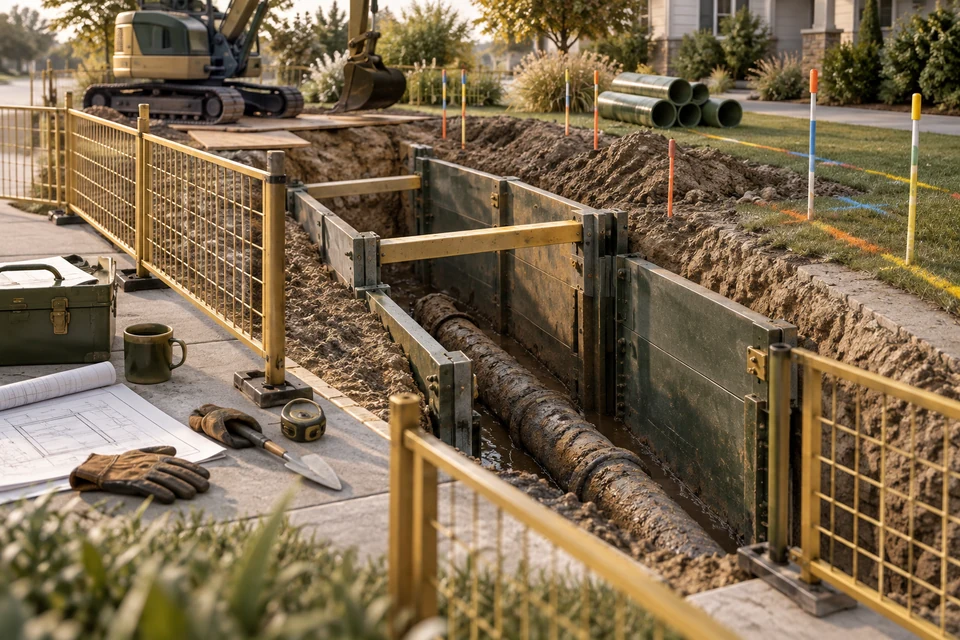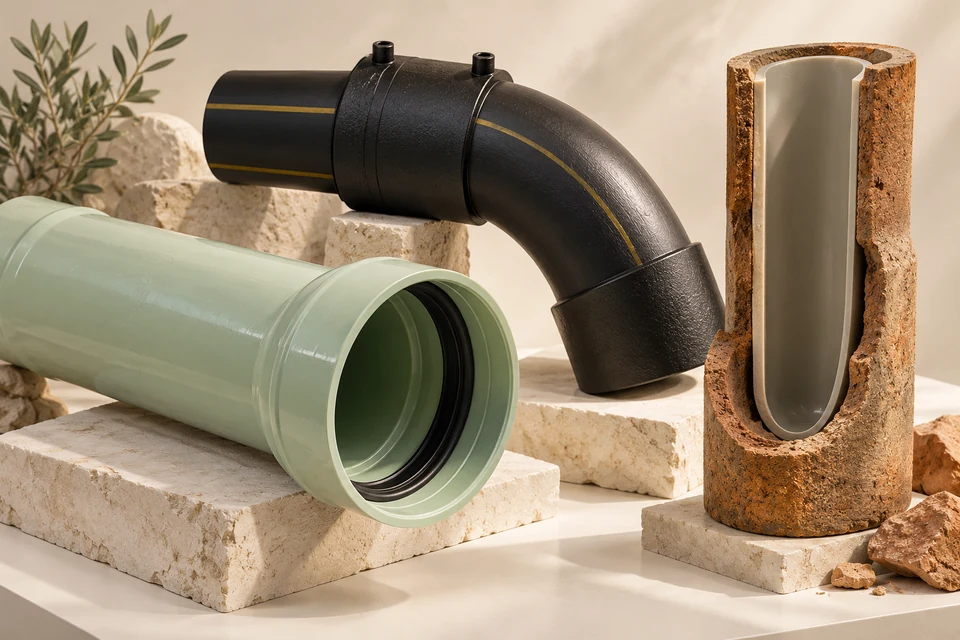
A new residential sewer line in Calgary and Alberta is almost always PVC plastic when it is laid in a trench, high-density polyethylene (HDPE) when it is pulled in by pipe bursting, or a resin liner when the old pipe is relined. Plastic sewer pipe has a long design life, but how long a new line actually lasts depends mostly on bedding, grade, backfill and what goes down it.
- City of Calgary records show PVC became the norm for City-side service lines in the 1980s: over 90 percent of lines dated from the 1980s onward are recorded as PVC.
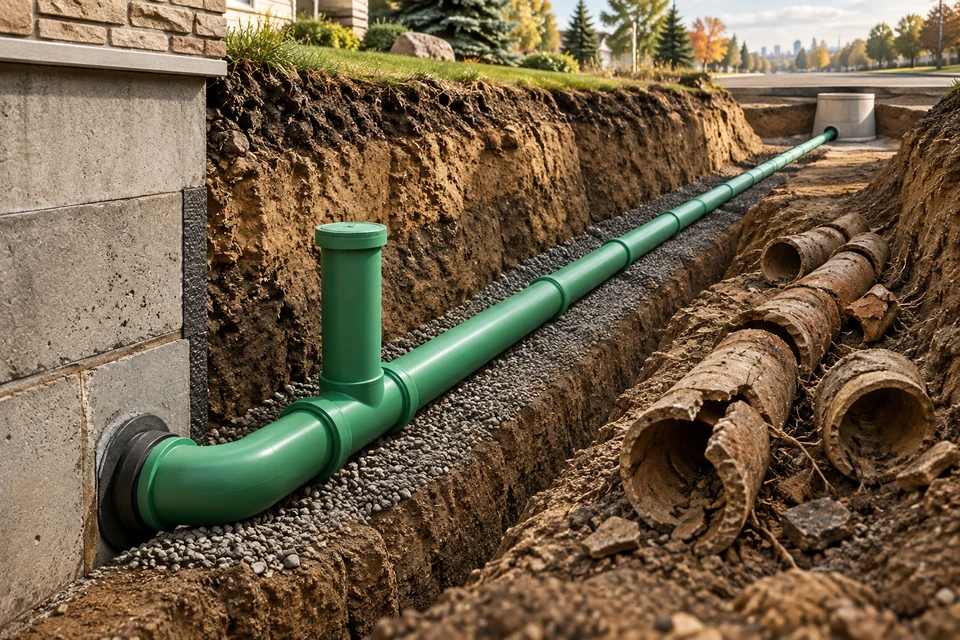
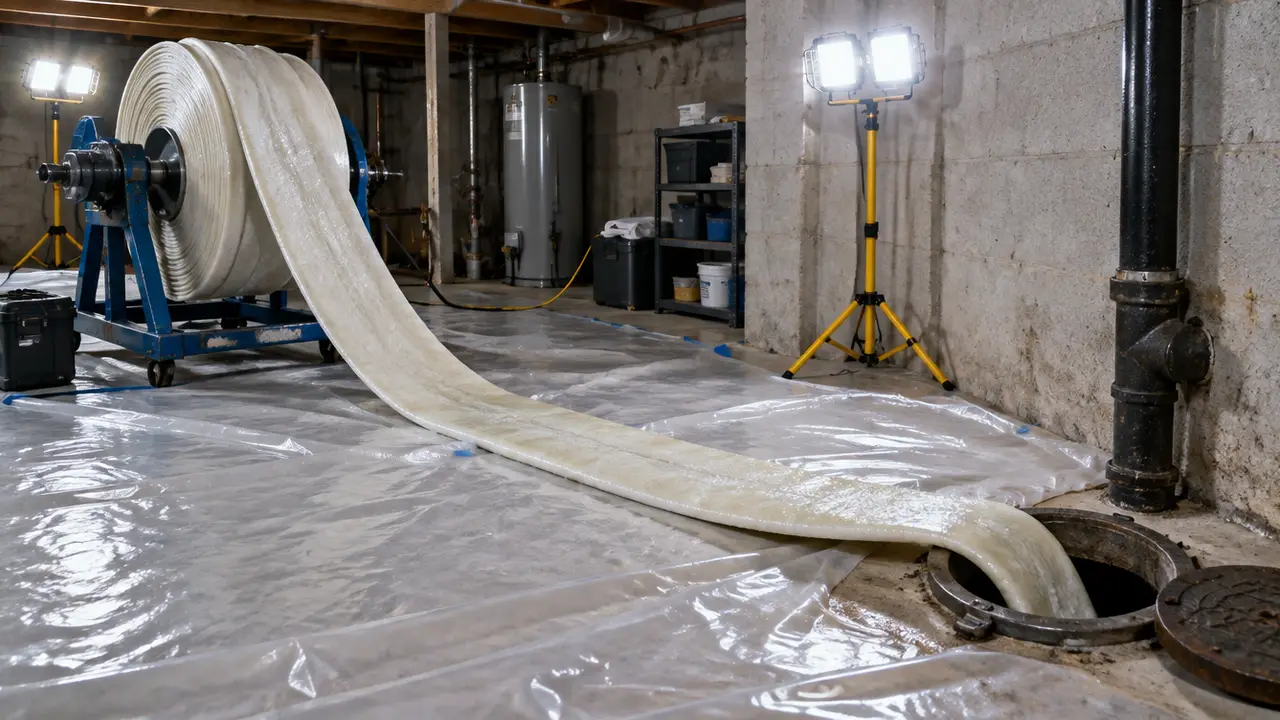
- Open-cut replacements use PVC sewer pipe; bursting pulls in fused HDPE; lining leaves a resin pipe inside the old one.
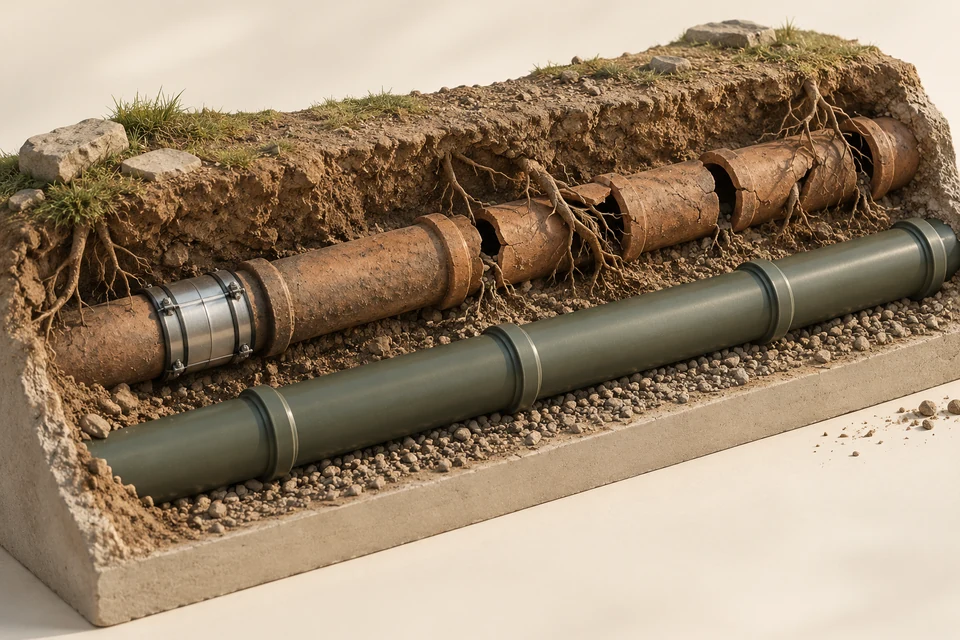
- Material is rarely what shortens a new line's life. Poor bedding, bellies, crushed backfill and roots at old connections are.
- Ask for the pipe type, its markings and the warranty in writing, and keep the after-video as the baseline.
- Inside the house, ABS or PVC drain pipe joins the new line at the foundation; the joint is part of the job.
01 /What are new sewer lines made of?
Three materials cover almost every new residential sewer line in Alberta, and which one you get depends on how the line is built.
| Method | Material | How it is joined | What to ask for |
|---|---|---|---|
| Open cut (trench) | PVC sewer pipe | Gasketed bell-and-spigot or solvent-welded fittings | Pipe type and markings, bedding material |
| Pipe bursting | High-density polyethylene (HDPE) | Butt-fused into one continuous length | Outside diameter and dimension ratio |
| Lining (CIPP) | Resin-saturated liner tube cured inside the old pipe | Continuous, no joints along the lined length | Resin type, thickness, how connections are reinstated |
| Inside the house | ABS or PVC drain pipe | Solvent-welded | How the new line joins the building drain |
The plumbing code decides which materials are acceptable for a building sewer, and each is made and marked to a published standard. You do not need to choose the material yourself, but you should know what is being installed. Printed markings on PVC and HDPE identify the material, size and standard; ask the contractor to show you before the pipe is buried, or to name it on the invoice.
02 /What does Calgary's own data say about sewer pipe materials over time?
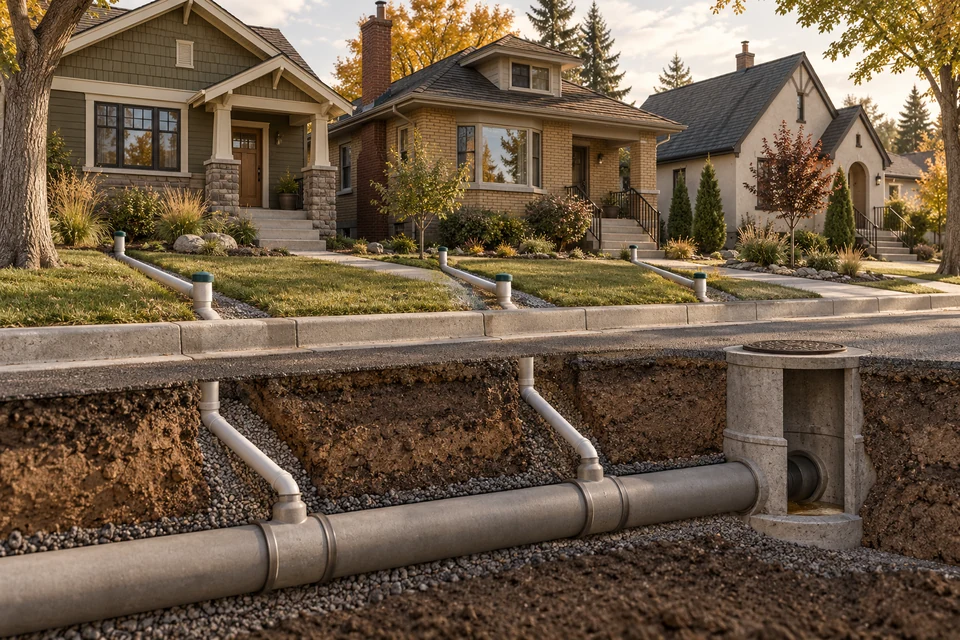
The City of Calgary publishes the material and installed year of the City-owned section of each sanitary service line. Grouped by decade in the HAUSE network's Calgary atlas, those records show a clear change in what went into the ground.
| Decade | Lines on record | Most common codes |
|---|---|---|
| 1950s | 23,165 | OTHER 29.5%, TP 27.2%, TIL 24.9% |
| 1960s | 31,032 | TIL 75.3%, cast iron 12.0%, OTHER 8.2% |
| 1970s | 60,513 | TIL 72.3%, PVC 18.3%, cast iron 5.7% |
| 1980s | 32,736 | PVC 91.6%, TIL 3.5%, cast iron 2.4% |
| 1990s | 57,558 | PVC 92.8%, unknown 7.1% |
| 2000s | 67,922 | PVC 99.2% |
| 2010s | 49,258 | PVC 97.6%, CIPP 1.7% |
| 2020s | 37,161 | PVC 91.4%, CIPP 8.5% |
Two cautions apply. The City's metadata does not define the TIL, TP and OTHER codes; the network's Calgary sites read TIL as clay tile, but that is an interpretation. And these records describe only the City's section, which the City notes can differ in material and age from the private pipe on your lot. Still, the switch is striking: lines dated in the 1960s and 1970s are mostly TIL, and from the 1980s onward more than nine in ten are PVC. The rising CIPP share in the 2020s reflects relining of existing City-side pipes.
03 /How long does a new sewer line last?
A new plastic sewer line is designed to last for many decades, and a well-installed one should outlast most of the time you will own the house. Cured-in-place liners are commonly quoted with a design life of about 50 years. No honest contractor can promise an exact lifespan, and you should be wary of anyone who presents one as a promise rather than a design figure.
What a new line cannot do is outlast a bad installation. Plastic pipe does not rust or rot, so the failures seen in new lines are almost always about how it was laid and what happened afterwards, not about the material wearing out.
| Cause | What happens | How to prevent it |
|---|---|---|
| Poor bedding or backfill | Pipe deflects, joints open or a belly forms | Bedding under and around the pipe, compacted lifts, an inspection before backfill |
| Wrong grade | Solids settle in low spots and clogs recur | Grade checked in the open trench; after-video shows no standing water |
| Old connections left in place | Roots enter at the remaining clay or cast iron joint | Replace to a sound point; proper transition couplings |
| Construction damage | Crushed or displaced pipe under later work | Mark the route; keep heavy equipment off new shallow pipe |
| What goes down the drain | Grease and wipes build up in any pipe | Keep fats and wipes out of drains |
04 /What happens where the new line meets the old pipe?
Every new line has at least two joints to something older: the house drain at the foundation and the connection at the property line or main. On a partial replacement there may be more, where new pipe meets a section of clay or cast iron that is staying. Those transitions are where a new line is most likely to have trouble, because two different materials, often of slightly different outside diameters, have to be joined watertight and in line.
- Use a coupling made for the two materials, not a patch of mortar or tape. Ask what fitting will be used at each transition.
- Replace to a sound point. If the pipe beyond the transition is cracked or rooted, the new line just moves the problem a metre along.
- Support the joint. A transition sitting on loose fill can settle and open, which is exactly where roots find their way in.
- See it on the after-video. A clean transition looks like a smooth step between materials, not a lip or a gap.
If only part of a line is being replaced, the camera report should say what condition the remaining section is in, so you know what you are keeping.
05 /Is PVC the best material for a new sewer line?
For an open-cut residential lateral in Alberta, PVC sewer pipe is the default, and the City's own records show it has been the dominant material on City-side service lines since the 1980s. It is light, smooth inside, joins with gaskets or solvent welds, does not corrode, and is what inspectors and contractors expect to see. HDPE is used when the pipe is pulled through the ground by bursting, because it can be fused into one flexible, continuous length. A liner is the choice when the old pipe stays in place.
Which of those you end up with is really a choice of method, not material, and the method follows the footage. The New Line or Repair? Check and new line vs repair help you get to that choice; the installation craft itself, such as bedding, joints and grade, is covered on sister site SewerInstall.com.
06 /What should I keep so I know my new line is sound?
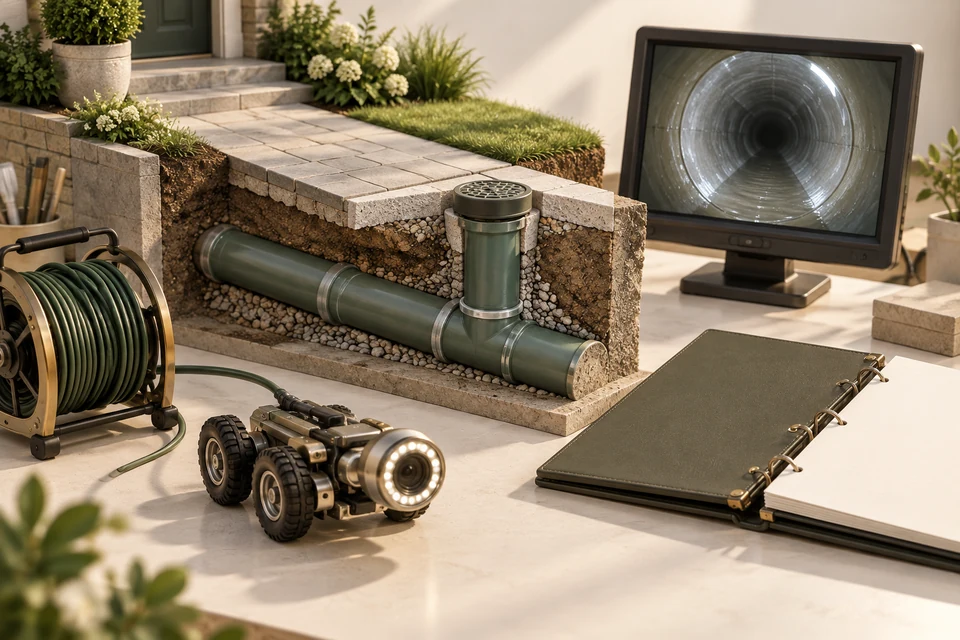
The single most useful record is the after-video: a camera run of the new line from the cleanout to the connection, recorded at handover. It shows a continuous, clean pipe with no standing water, and it becomes the baseline for any future question. If a problem appears in year three, footage of the same line from day one settles whether it was there from the start.
- The pipe material, size and markings, named on the invoice.
- The after-video and the date it was recorded.
- The permit and inspection record.
- An as-built sketch with depth, cleanout locations and the connection point.
- The warranty in writing, with what it covers and for how long.
What a good closing package contains, and how to read the warranty, is in handover and warranty. Costs for each method are on the cost page, and when you are ready to compare contractors, send your footage and details.
FAQQuestions people ask
What material is used for new sewer lines in Alberta?
Mostly PVC sewer pipe for open-cut work, fused HDPE for pipe bursting, and resin liners for relining. Inside the house, the drain is usually ABS or PVC.
How long does a new PVC sewer line last?
It is designed for many decades of service. In practice a new line's life depends far more on bedding, grade and backfill than on the plastic, which does not rust or rot.
Is HDPE better than PVC for a sewer line?
Each suits a different method. HDPE is fused into a continuous flexible pipe for bursting; PVC is the standard for lines laid in an open trench.
When did Calgary start using PVC sewer pipe?
On the City side, records show PVC overtaking the older TIL code in the 1980s: over 90 percent of City-side lines dated from that decade onward are recorded as PVC.
Can a new sewer line develop roots?
Plastic pipe with sound joints resists roots, but roots can still enter at an old connection left in place, a poorly made transition or a joint pulled open by settlement.
NETWORKGo deeper across the HAUSE Sewer network
Sewer lining for tree roots: will a CIPP liner stop them for good?
Sewer lining for tree roots: how a CIPP liner seals root-damaged joints, which lines qualify, preparation, weak points at the ends, and planning costs.
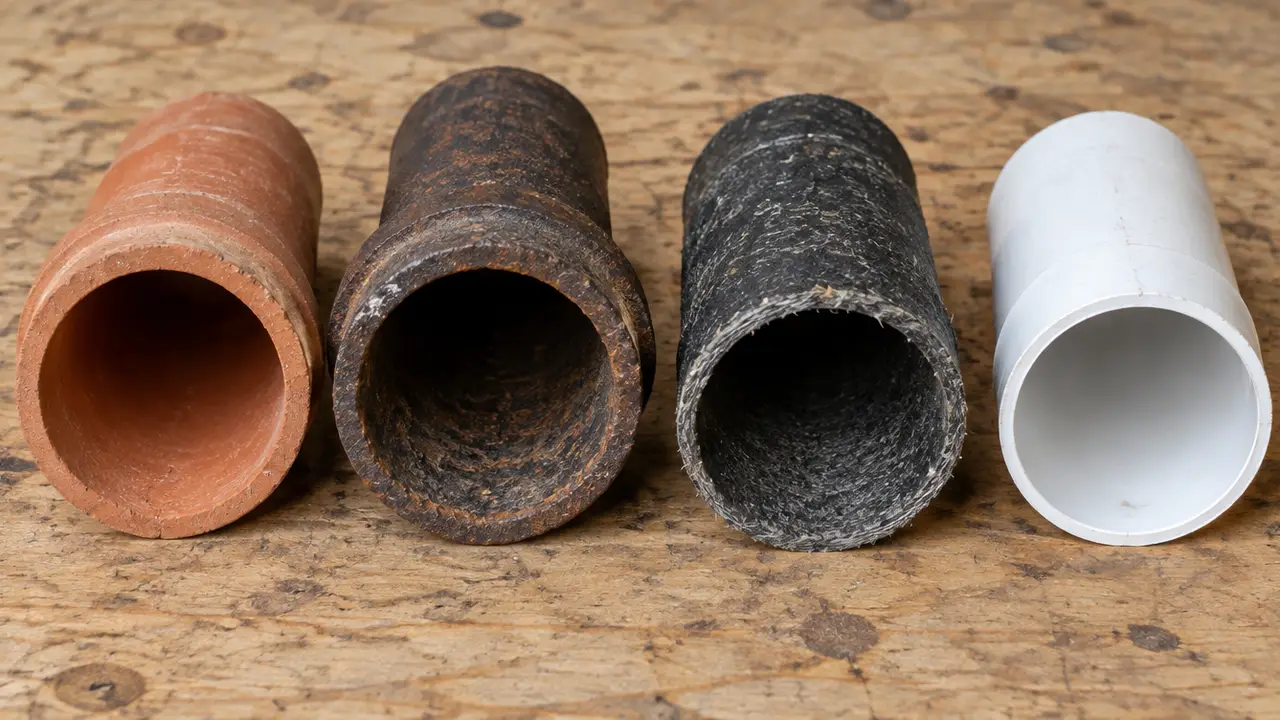
Sewer pipe materials by construction era, and what each looks like on camera
Sewer pipe materials by era in Canadian homes: clay, cast iron, Orangeburg, concrete, ABS and PVC, how each one fails and what it looks like on camera.
Sewer camera inspection cost, and what the fee should include
Sewer camera inspection cost in Canada for 2026: standalone, pre-purchase and add-on scope prices in CAD, what a proper report includes and when the fee is wasted.